
Occupational medicine
Ergonomics
Ergonomics is the adaptation of work, the workplace and work equipment to people, so that work remains healthy, safe and efficient. It prevents musculoskeletal complaints, which are among the most common work-related health problems.
5 frequently asked questions · sources at the end of the article
Typical topics
- Computer workstation: desk, chair, screen, lighting
- Lifting, carrying, pushing and pulling
- Repetitive movements and awkward postures
- Alternating between standing and sitting
- Vibrations
- Work organisation: breaks, variety
Legal framework
Workplaces, work equipment and processes must be designed ergonomically (Art. 6 of the Swiss Labour Act (ArG), Art. 23–25 of Ordinance 3 to the Labour Act (ArGV 3)). SECO and Suva publish checklists, e.g. on screen work and manual handling of loads.
Workplace analysis
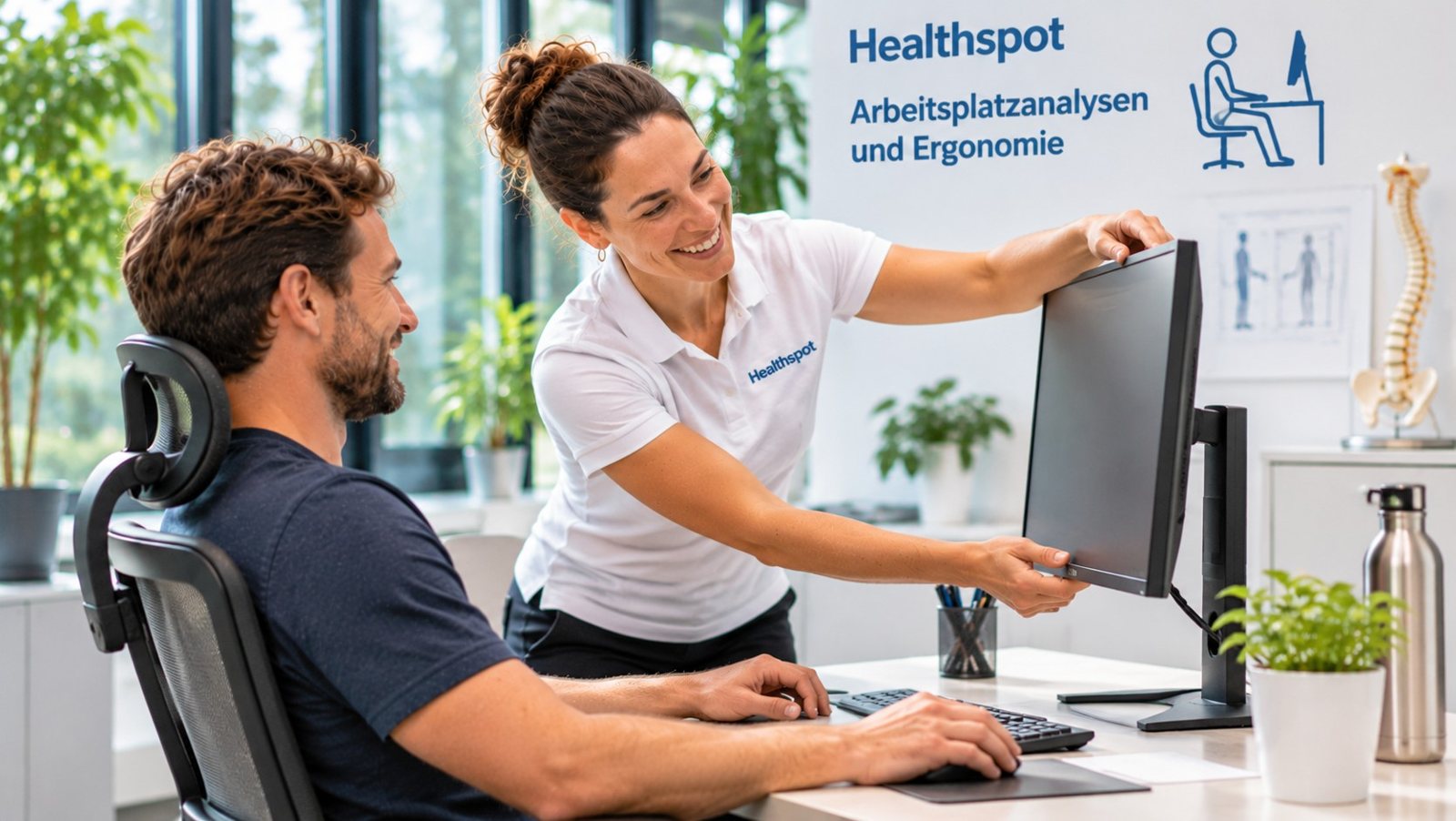
Specialists assess posture, processes and equipment on site and suggest improvements, from the right desk height to lifting aids. Duration: depending on scope.
Impact
Fewer back, neck and joint complaints, fewer absences, greater performance and satisfaction.
Frequently asked questions about Ergonomics
What are the benefits of ergonomics advice?
Fewer back, neck and joint complaints and fewer absences.
Does Healthspot come on site?
Yes, workplace analyses take place at your premises.
What does it cost?
It depends on the scope; you will receive a quotation.
Is ergonomics required by law?
Yes, as part of health protection under ArGV 3.
Does this also apply when working from home?
The principles apply there too; employers should provide information and advice.