
First aid training
Practical competence
Practical competence means not only knowing what to do in an emergency, but actually doing it correctly under stress. It is the real goal of all first aid training.
4 frequently asked questions · sources at the end of the article
Components
- Specialist knowledge: what happens in the body, what needs to be done?
- Skills: chest compressions, AED, bandages
- Decision-making: setting priorities
- Communication and teamwork: raising the alarm, assigning tasks
- Self-confidence: overcoming the inhibition to act
How is practical competence developed?
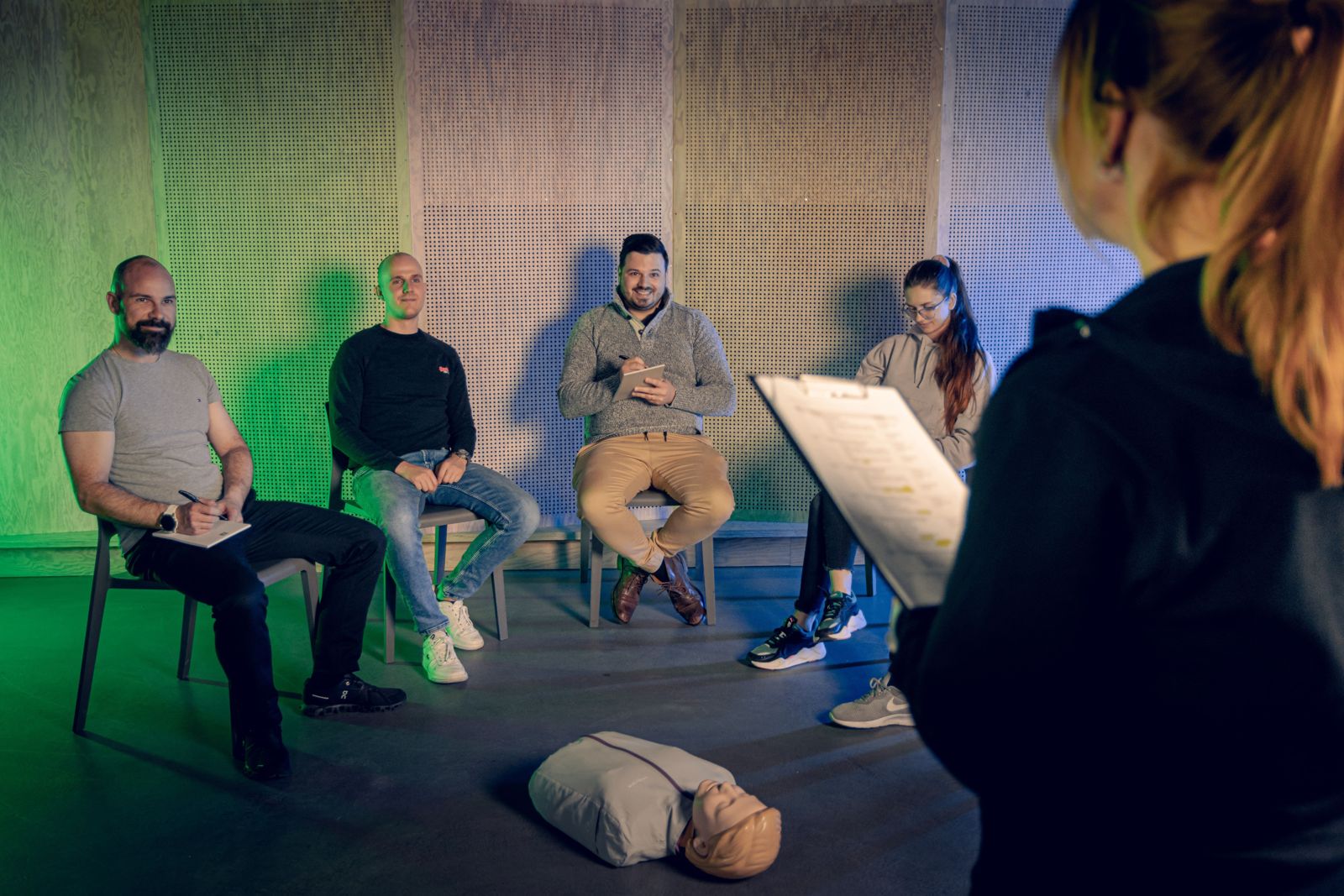
Through plenty of hands-on practice, realistic scenarios, feedback and repetition. This is why the SRC guidelines require at least 30 minutes of hands-on training per person, and IVR courses work with case studies and learning assessments.
Frequently asked questions about Practical competence
Is theoretical knowledge enough?
No. In an emergency, what counts is whether you have practised the techniques.
How do you train for stress?
With realistic scenarios and team exercises.
How long does the competence last?
Without practice it declines within months, which is why it should be refreshed regularly.
What is the most important goal?
That helpers act at all.