
Industries
Hospitals and clinics
In hospitals and clinics, professionals work with a high level of responsibility, often in shifts and with infection risks. Non-medical staff should also be able to act correctly in an emergency.
3 frequently asked questions · sources at the end of the article
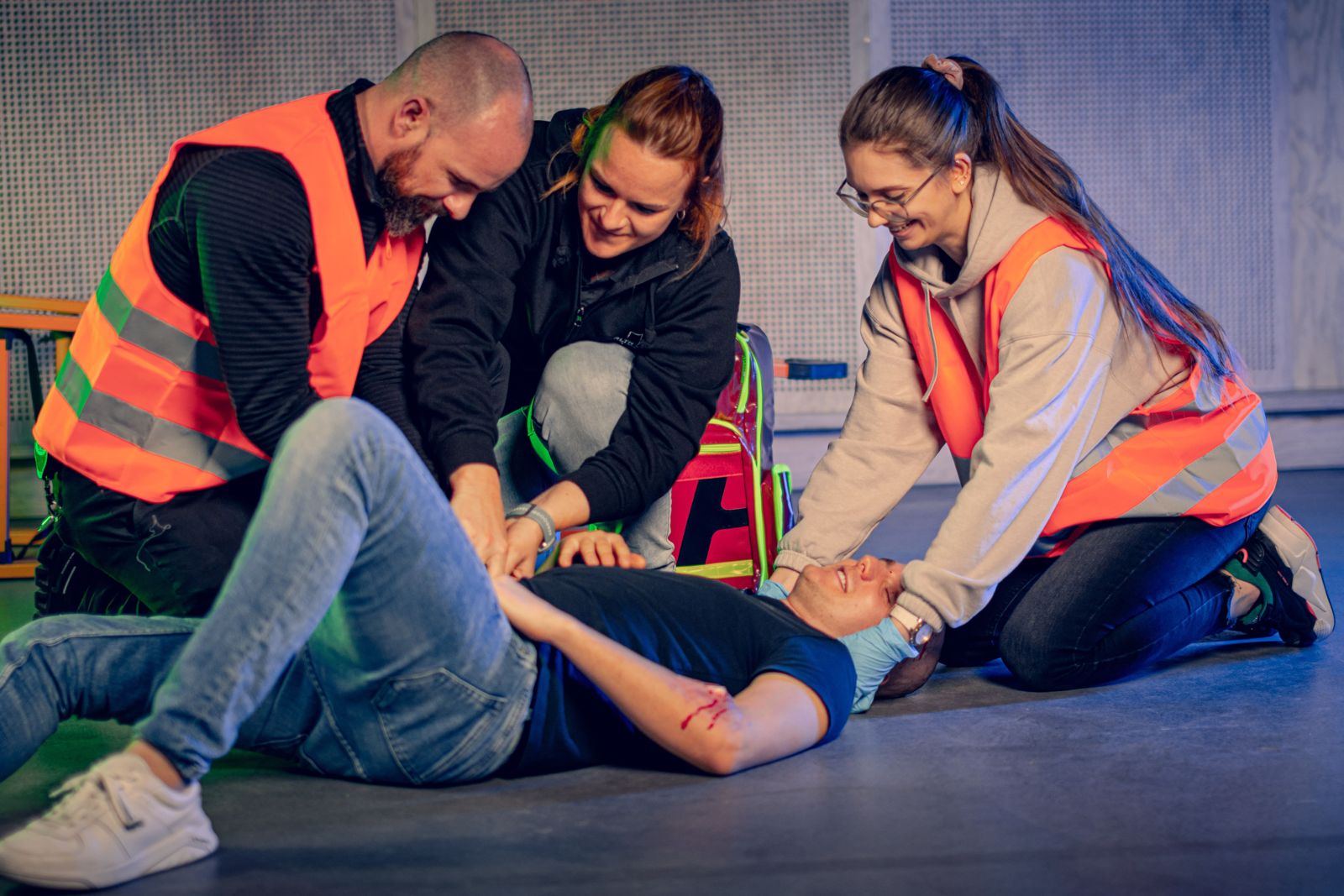
Typical emergencies and risks
- Cardiac arrest in unmonitored areas (cafeteria, administration, car park)
- Needlestick injuries
- Aggression towards staff
- Infections
- Back strain during patient transfers
Recommended first aid training
BLS-AED-SRC Kompakt for non-medical staff, Komplett for nursing staff; for intensive care and emergency areas, advanced formats such as ILS, ALS or PALS from specialised providers.
Occupational medicine and health protection
Shift work medicals, vaccinations and serology (e.g. hepatitis B), procedures after needlestick and cut injuries, ergonomics, mental health and corporate health management.
Delivery
Training takes place at your premises, at the Medical Hub Basel or in Spiez; examinations at the Medical Hub Basel or on site. Both can be combined, including for shift operations, and in German, English, French and, on request, Italian.
Frequently asked questions about Hospitals and clinics
Do non-medical staff need training?
Yes, a BLS-AED-SRC course is highly recommended.
What should be done after a needlestick injury?
Let the wound bleed, disinfect it and report it immediately to the internal staff physician or the emergency unit.
Do the night work rules also apply in hospitals?
Yes, with special provisions under ArGV 2.