
Workplace health and prevention
Stress at work
Stress arises when demands are perceived as greater than the available resources. In the short term it mobilises energy, but chronic stress without recovery can make people ill.
4 frequently asked questions · sources at the end of the article
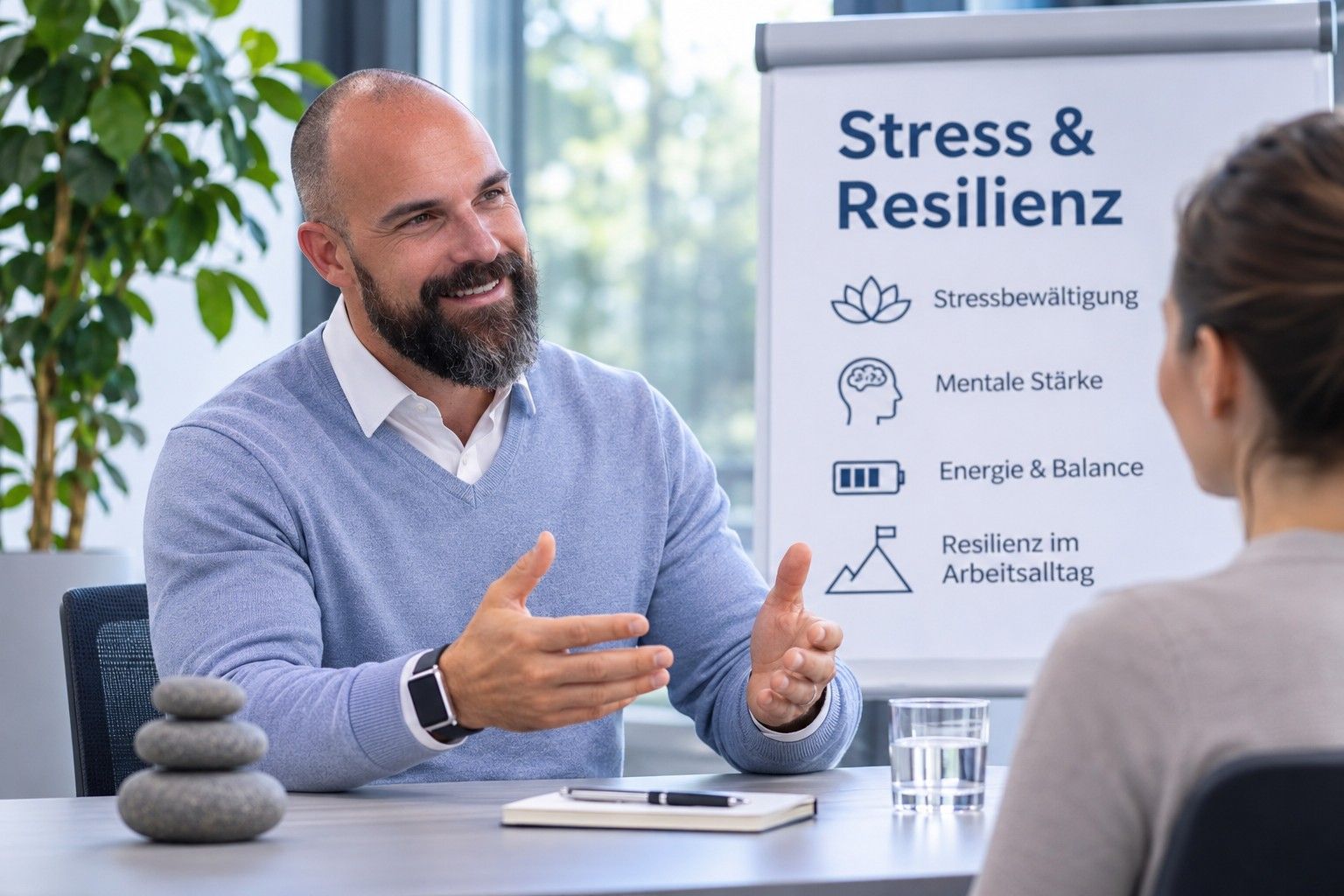
What happens in the body?
Under stress, hormones such as adrenaline and cortisol are released: pulse and blood pressure rise, muscles tense and digestion slows down. Without recovery, the body remains in a state of alarm.
Consequences of chronic stress
- Sleep disorders, exhaustion
- Headaches and back pain
- Gastrointestinal complaints
- Increased cardiovascular risk
- Concentration problems, errors, accidents
- Anxiety, depression, burnout
Figures for Switzerland
Health Promotion Switzerland (Gesundheitsförderung Schweiz) regularly measures the ratio of strains to resources among the working population with its Job Stress Index. According to this, a significant proportion of working people have more strains than resources.
Measures
- Reduce strains: workload, priorities, interruptions
- Strengthen resources: scope for decision-making, support, recognition
- Enable recovery: breaks, rules on availability
- Individual skills: stress management, sleep, exercise
Frequently asked questions about Stress at work
Is stress always bad?
No, short-term stress can boost performance; chronic stress without recovery is the problem.
What is the Job Stress Index?
An indicator from Health Promotion Switzerland on the ratio of strains to resources.
What can I do myself?
Take breaks, exercise, sleep, set priorities and seek support.
What can the company do?
Analyse strains, improve work organisation and train managers.