
First aid and emergency medicine
Shortness of breath
Shortness of breath (dyspnoea) is the feeling of not getting enough air. It can be harmless, for example after exertion, or a sign of life-threatening conditions of the lungs, heart or airway.
5 frequently asked questions · sources at the end of the article
What is shortness of breath?
Shortness of breath is a symptom, not a diagnosis. Possible causes include asthma, pneumonia, heart failure, heart attack, pulmonary embolism, allergic reaction, foreign bodies, chest injuries or hyperventilation.
Anatomy and background
When breathing in, the diaphragm contracts, the chest expands and air flows through the airway into the lungs. In the alveoli, oxygen is absorbed into the blood and carbon dioxide is released. Disturbances in any section (airway, lungs, respiratory muscles, heart) can trigger shortness of breath.
Symptoms and recognition
- Rapid, laboured breathing
- Use of accessory respiratory muscles, sitting with arms propped up
- Speaking only in short sentences
- Restlessness, anxiety
- Pallor or bluish lips (cyanosis)
- Breathing sounds such as wheezing, gurgling or stridor
First aid measures
- Calm the person and do not leave them alone
- Raise the upper body or let the person sit, with arms supported
- Loosen tight clothing, provide fresh air
- Help the person use their own medication (e.g. asthma inhaler)
- Call 144 if shortness of breath is severe or worsening
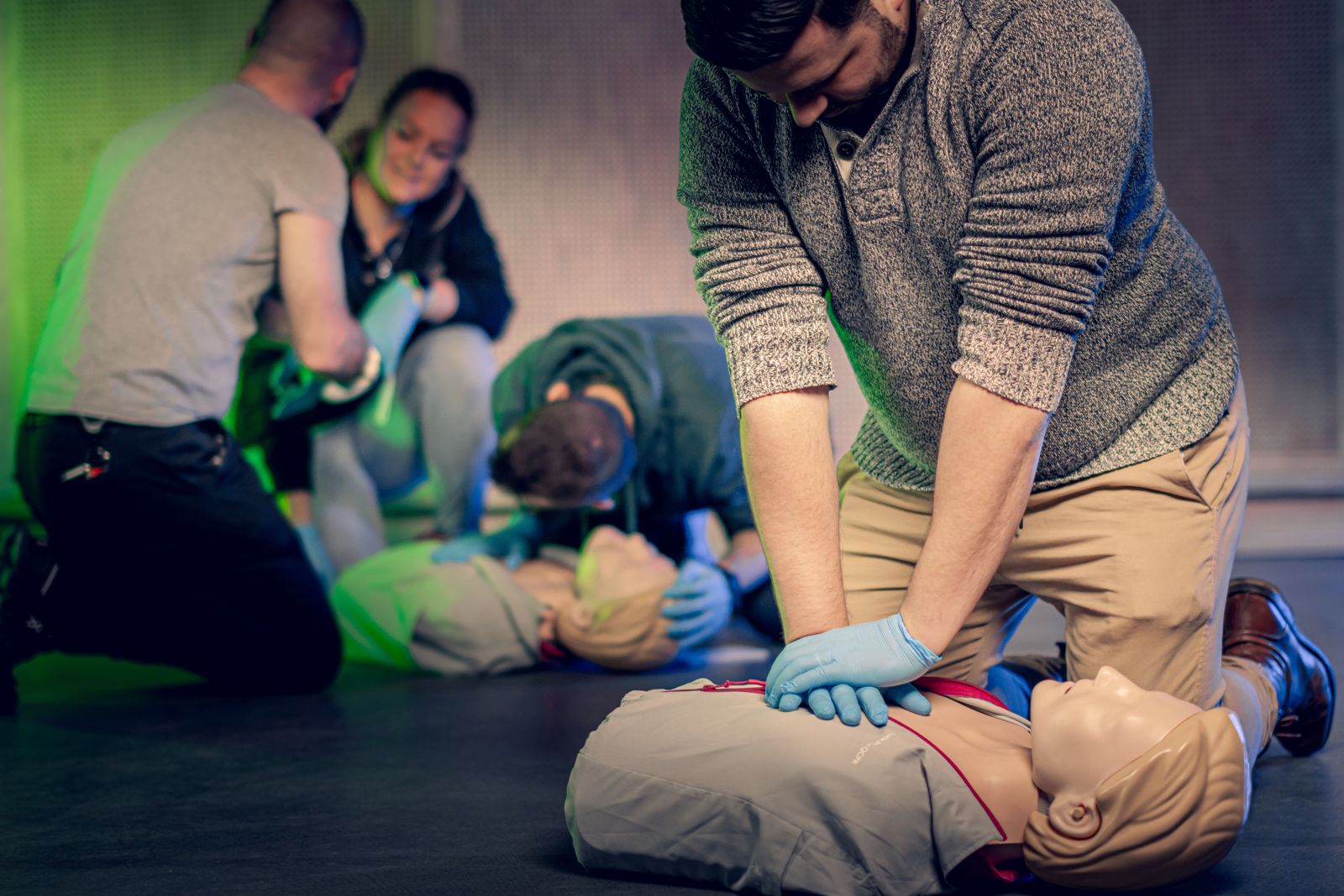
- If unconscious and not breathing normally: resuscitation
Recommended training
Shortness of breath is part of all IVR levels. From Level 2, structured assessment using XABCDE is practised; in Level 3, oxygen administration and pulse oximetry.
Occupational health recommendation
Repeated shortness of breath at work should be investigated by a doctor, especially with exposure to dusts, gases or vapours. For respirator wearers, a fitness assessment is advisable.
Frequently asked questions about Shortness of breath
Which position helps with shortness of breath?
Upper body raised, ideally sitting with arms supported.
When is shortness of breath an emergency?
When it is sudden, severe or worsening, when the person can no longer speak or when the lips turn bluish.
What is hyperventilation?
Breathing that is too fast and deep, often due to anxiety; it leads to tingling and dizziness. Other causes must nevertheless be considered.
Am I allowed to give oxygen?
Only with appropriate training and equipment, e.g. from IVR Level 3.
What is stridor?
A whistling sound when breathing in that indicates a narrowing of the upper airway.