
First aid and emergency medicine
Choking
In choking (airway obstruction), a foreign body, such as a mouthful of food or, in children, part of a toy, blocks the airway. In complete obstruction, the person can no longer speak, cough or breathe. Acting immediately saves lives.
5 frequently asked questions · sources at the end of the article
What is choking?
A distinction is made between partial obstruction (the person is coughing effectively) and complete obstruction (no effective cough, no voice). Risk groups include young children, older people and people with swallowing difficulties.
Anatomy and background
Normally, the epiglottis closes off the windpipe during swallowing. When talking, laughing or eating hastily, a mouthful of food can enter the larynx or windpipe.
Symptoms and recognition
- Sudden coughing fit while eating
- Clutching the throat
- Inability to speak or breathe
- Whistling sound, bluish discolouration
- Unconsciousness in complete obstruction
First aid measures
- Effective cough: encourage coughing, do not slap the back
- Ineffective cough: up to 5 firm blows between the shoulder blades (upper body leaning forward)
- If unsuccessful: up to 5 abdominal thrusts (Heimlich manoeuvre)
- Repeat alternately
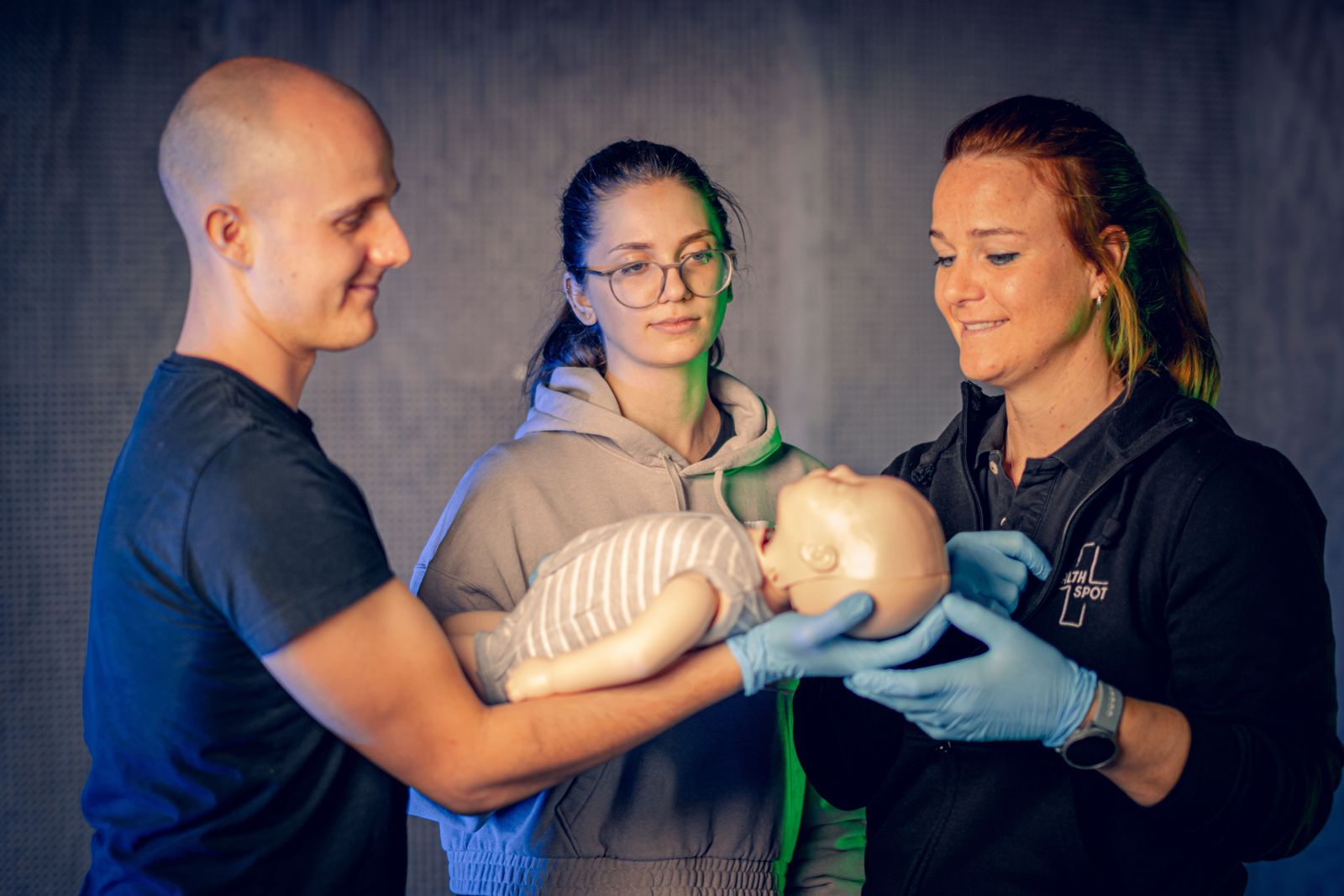
- Infants: back blows in a face-down position and chest thrusts instead of abdominal thrusts
- If unconscious: call 144, place on the back, start resuscitation
Recommended training
Airway obstruction is a mandatory part of the BLS-AED-SRC Komplett course and is practised in IVR courses and in the ‘paediatric emergencies’ module.
Occupational health recommendation
In staff canteens, retirement and nursing homes and childcare centres, several people should be able to carry out these measures. After a Heimlich manoeuvre, a medical check-up is always necessary.
Frequently asked questions about Choking
How do I recognise an airway obstruction?
Sudden difficulty breathing while eating, inability to speak, often clutching the throat.
Is the Heimlich manoeuvre dangerous?
It can cause internal injuries, so the person should be checked by a doctor afterwards.
What is different for infants?
Chest thrusts are performed instead of abdominal thrusts.
What should I do if the person becomes unconscious?
Call 144, place them on their back and start resuscitation.
Should I search the mouth with my finger?
Only remove visible foreign bodies; do not search blindly.