
First aid and emergency medicine
Bleeding
Severe bleeding can become life-threatening within minutes. The aim of first aid is to stop it as quickly as possible: with direct pressure, a pressure bandage and, for life-threatening bleeding from the arms or legs, a tourniquet.
6 frequently asked questions · sources at the end of the article
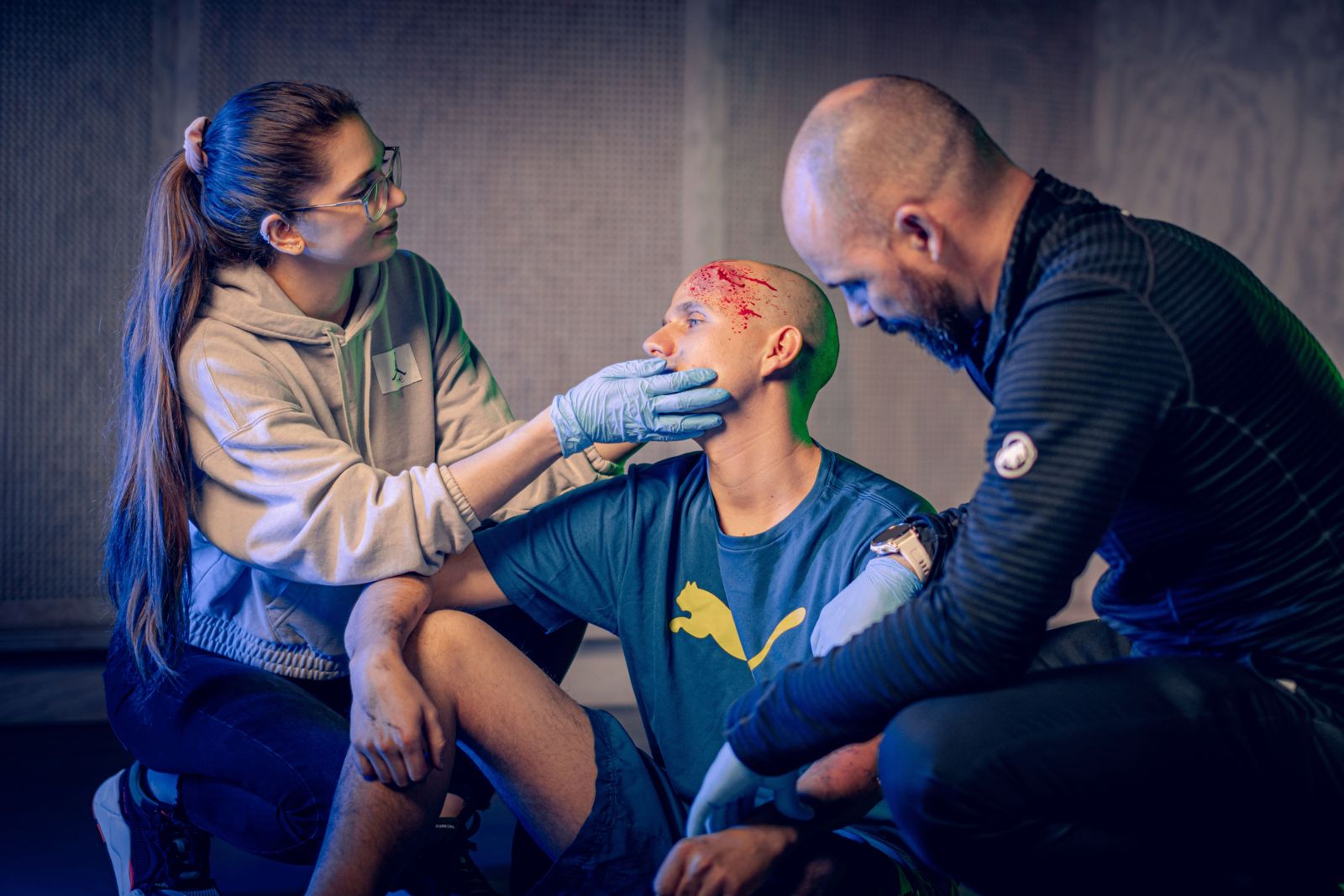
What is severe bleeding?
A distinction is made between external bleeding (visible) and internal bleeding (e.g. in the abdomen, chest or pelvis after accidents). Bleeding is life-threatening when large amounts of blood are lost in a short time or when blood spurts out in pulses.
Anatomy and background
An adult has about 5 to 6 litres of blood. A rapid loss of more than about one litre can lead to shock. Arteries carry bright red blood under high pressure away from the heart, so injuries spurt in pulses. Veins carry darker blood back to the heart, so it flows evenly. Capillary bleeding oozes.
Symptoms and recognition
- Spurting or heavily flowing bleeding
- Pool of blood, blood-soaked clothing
- Pallor, cold sweat, rapid pulse, restlessness (shock)
- After an accident without visible bleeding: abdominal or chest pain, signs of shock, suspected internal bleeding
First aid measures
- Protect yourself: gloves, if available
- Apply direct pressure to the wound immediately, with your hand if necessary
- Apply a pressure bandage and raise the affected body part if possible
- Life-threatening bleeding from an arm or leg: apply a tourniquet above the wound and note the time
- Lay the person down, call 144, protect them from getting cold
- If internal bleeding is suspected: lay the person flat, nothing to drink, call 144
Recommended training
Bleeding control is a core part of IVR First Aid. From Level 2, the XABCDE approach is used: the X stands for life-threatening external bleeding, which is stopped first. Tourniquets and haemostatic agents are practised in Levels 2 and 3. The module «Bleeding» can be selected in the configurator.
Occupational health recommendation
In companies with cutting, sawing or crushing risks, pressure bandages and tourniquets belong at the hazard points, and employees should know how to use them. Protective measures according to the STOP principle (protective devices, cut-resistant gloves) prevent injuries. Up-to-date tetanus protection is recommended.
Frequently asked questions about Bleeding
Arterial or venous: what is the difference?
Arterial blood is bright red and spurts in pulses; venous blood is darker and flows evenly.
Am I allowed to apply a tourniquet?
Yes, for life-threatening bleeding from an arm or leg; correct use is trained in the course.
How long can a tourniquet stay on?
It stays on until the ambulance service takes over; the time of application is noted. It is only released by professionals.
What should I do about a nosebleed?
Tilt the head slightly forward, pinch the nostrils together for 10 minutes, cool the neck; if bleeding is heavy or persistent, seek medical advice.
What if blood soaks through the pressure bandage?
Apply a second pressure bandage on top or increase manual pressure; on limbs, use a tourniquet if necessary.
How do I recognise internal bleeding?
Signs of shock without visible bleeding after an accident, abdominal or chest pain.