
First aid and emergency medicine
Wound care
Wound care covers all measures used to clean, protect and treat wounds in order to stop bleeding, prevent infection and promote healing.
5 frequently asked questions · sources at the end of the article
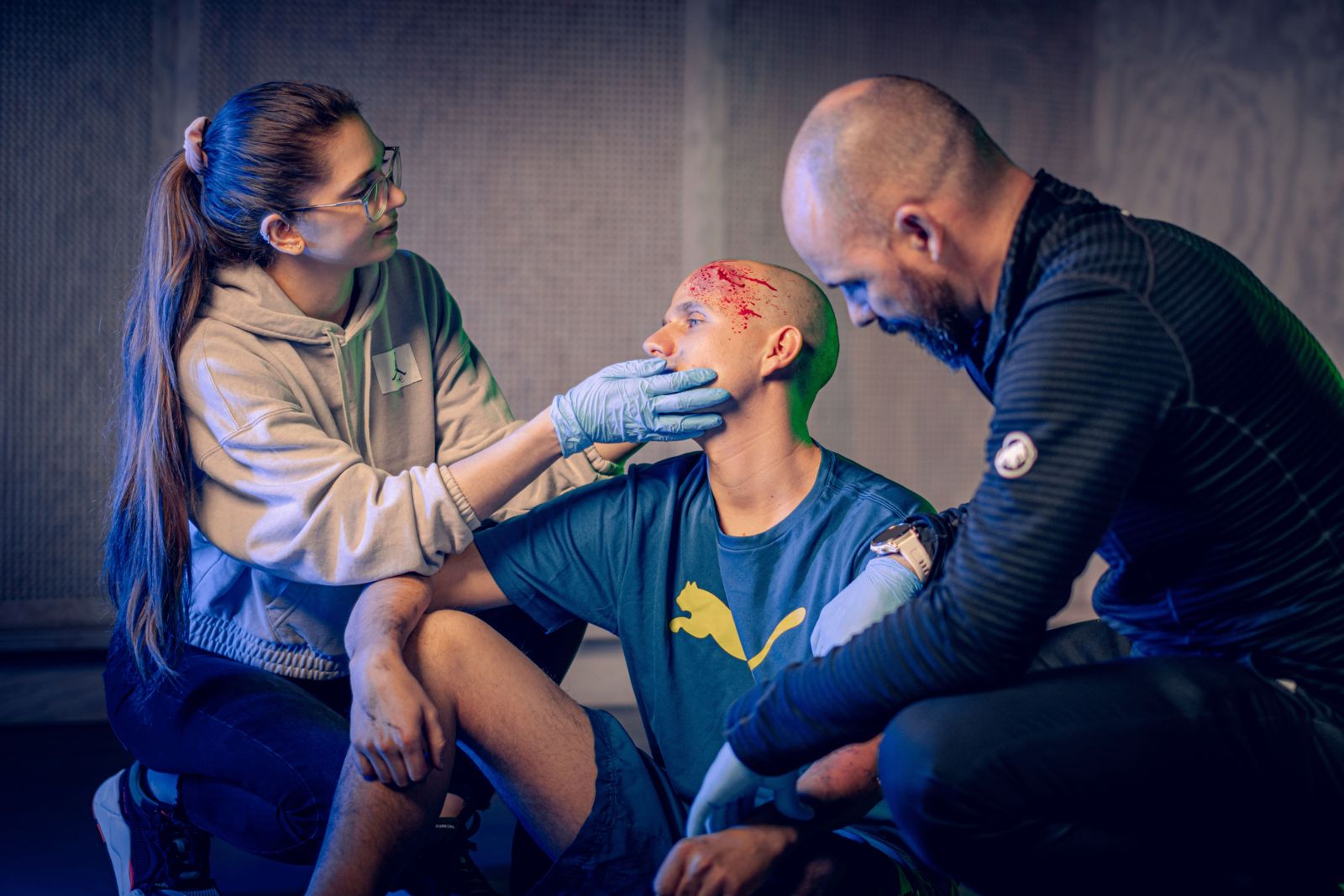
What is wound care?
Wounds are caused by cuts, stabs, grazes, crush injuries, bites or burns. In first aid, the priorities are stopping bleeding, protecting against contamination and deciding whether medical treatment is needed.
Anatomy and background
The skin protects against germs, fluid loss and injury. If it is cut through, blood vessels, nerves, tendons and muscles may also be affected. Wounds heal in phases: haemostasis, inflammation, formation of new tissue and remodelling.
Symptoms and recognition
- Bleeding (oozing, flowing, spurting)
- Contamination, foreign bodies
- Gaping wound edges
- Numbness or restricted movement (nerve or tendon injury)
- Later: redness, swelling, warmth, pus, which are signs of infection
First aid measures
- Wear gloves
- Stop severe bleeding first (pressure, pressure bandage)
- Rinse small wounds with clean water and disinfect if necessary
- Do not remove deeply embedded foreign bodies; pad around them instead
- Cover with sterile material (plaster, compress, bandage)
- Have the following treated by a doctor: gaping, deep or contaminated wounds, bites, wounds to the face or hands, missing tetanus protection
Recommended training
Wound care and bandaging techniques are part of IVR First Aid Level 1 to 3 and of custom company training (module «Bleeding and wounds»).
Occupational health recommendation
From an occupational medicine perspective, up-to-date tetanus protection (booster in accordance with the Swiss vaccination schedule) is important and, where there is contact with blood, for example in healthcare, protection against hepatitis B. Needlestick and cut injuries involving potentially infectious material require a defined company procedure.
Frequently asked questions about Wound care
Does every wound need to be disinfected?
Small wounds can be rinsed and disinfected; large or deep wounds are covered with sterile material and treated by a doctor.
When do stitches need to be done?
For gaping, deep wounds, ideally within a few hours.
What should I do with foreign bodies?
Leave large or deeply embedded foreign bodies in place and pad around them.
When do I need a tetanus vaccination?
If your vaccination protection is not up to date; your doctor will clarify this.
What belongs in the kit?
Gloves, wound disinfectant, plasters, sterile compresses, bandages, triangular bandage.