
Workplace health and prevention
Health-oriented leadership
Health-oriented leadership means that managers consciously support the health of their employees through appreciation, clear goals, scope for decision-making, fair distribution of work and acting as a role model themselves.
3 frequently asked questions · sources at the end of the article
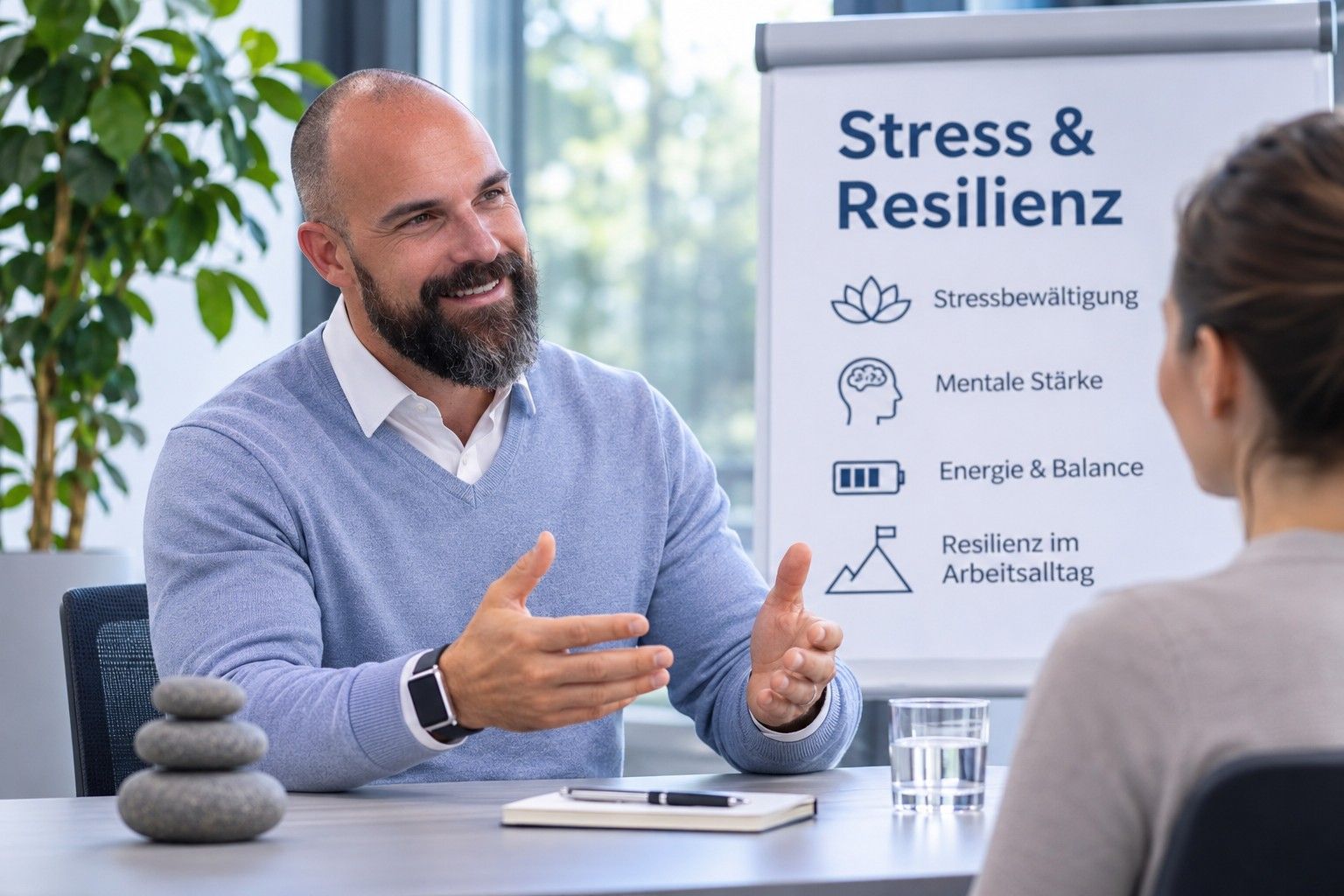
Why leadership matters
Managers directly influence work organisation, workload, climate and recognition. Studies show a link between leadership behaviour and employees' well-being and absences.
Characteristics
- Appreciation and recognition
- Clear goals and roles
- Scope for decision-making and participation
- Support with problems
- Attentiveness to warning signs
- Self-care as a role model
Implementation
Leadership training, conversation guides (e.g. return-to-work and welfare conversations), exchange among managers and involvement in corporate health management.
Frequently asked questions about Health-oriented leadership
Is health-oriented leadership mandatory?
Managers implement the employer's duty of care; the leadership style itself is not prescribed.
How do you learn it?
In training courses and through reflection in everyday work.
What is self-care?
Looking after your own health so that you remain a role model and resilient.