
First aid and emergency medicine
Stroke
A stroke occurs when part of the brain suddenly stops receiving blood – usually due to a blood clot – or when bleeding occurs in the brain. Every minute counts: if a stroke is suspected, call 144 immediately.
5 frequently asked questions · sources at the end of the article
What is a stroke?
About 80–85 % of strokes are caused by reduced blood flow (ischaemic stroke), the rest by bleeding. A temporary disturbance of blood flow with symptoms that disappear quickly (TIA) is a warning sign and also an emergency.
Anatomy and background
The brain is divided into regions that control speech, movement, sensation and vision. The left side of the brain controls the right side of the body and vice versa. Without blood flow, a very large number of nerve cells die every minute – hence ‘time is brain’.
Symptoms and recognition
- Sudden paralysis or numbness on one side of the body
- Drooping corner of the mouth
- Speech or comprehension problems
- Visual disturbances, double vision
- Dizziness, unsteady gait
- Sudden, extremely severe headache (indication of bleeding)
First aid measures
- Carry out the FAST test
- Call 144 immediately, note the time symptoms began
- Reassure the person, position with the upper body slightly raised
- Do not let them eat or drink (swallowing difficulties)
- Unconscious with normal breathing: recovery position on the paralysed side
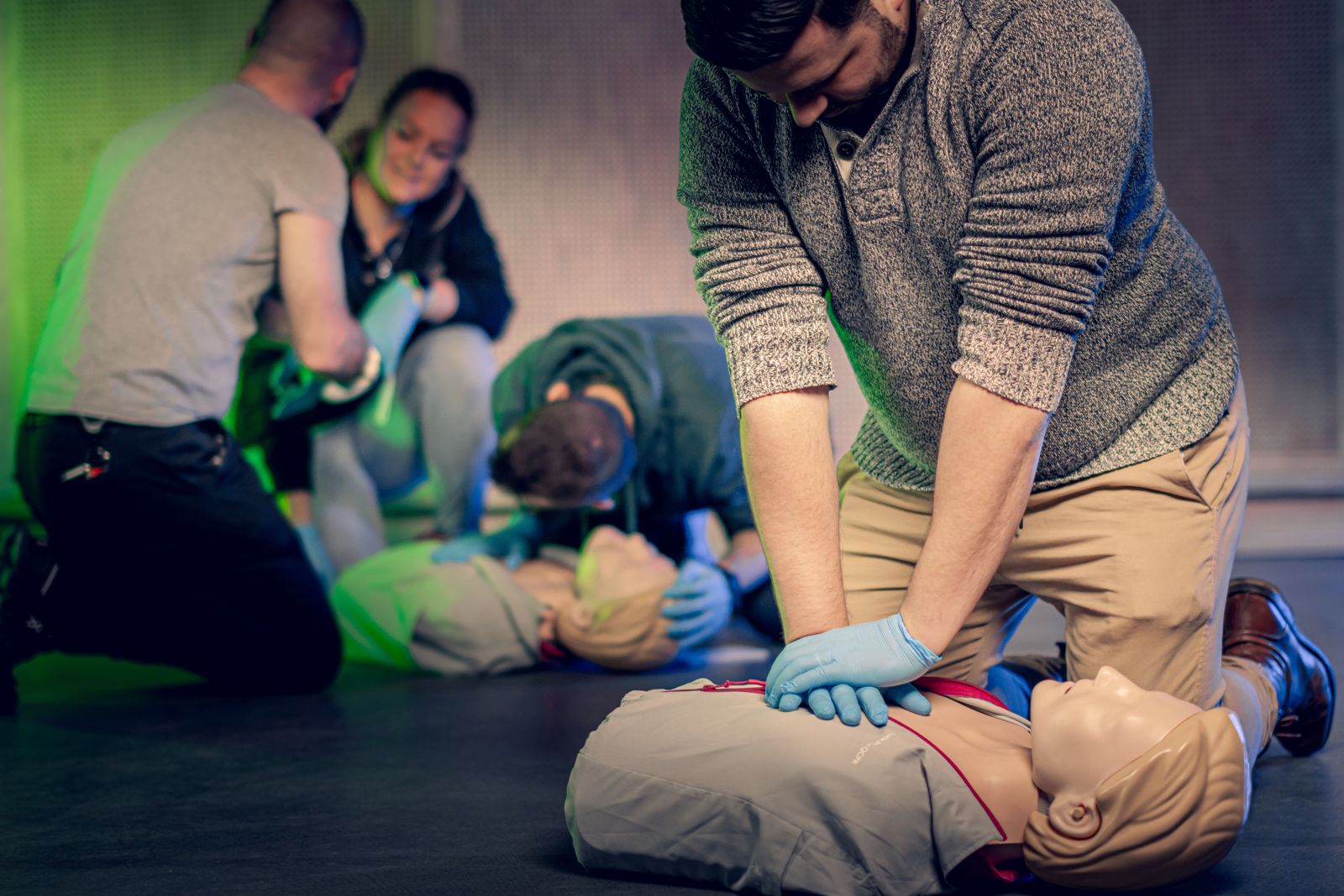
- No normal breathing: resuscitation and AED
Recommended training
Stroke is mandatory content in the BLS-AED-SRC Komplett course and in IVR First Aid.
Occupational health recommendation
Risk factors such as high blood pressure, atrial fibrillation, diabetes, smoking and raised blood lipids can be detected during preventive check-ups. After a stroke, occupational medicine supports the return to work and assesses, for example, fitness to drive.
Frequently asked questions about Stroke
Why is the time important?
Certain treatments are only possible within a narrow time window.
Can symptoms disappear again?
Yes (TIA) – even then it is an emergency, as a stroke may follow.
What is the FAST test?
A simple test of face, arms, speech and time.
Should I drive the person to hospital myself?
No, call 144 – the emergency services will take them to a suitable centre.
What increases the risk?
High blood pressure, atrial fibrillation, smoking, diabetes, blood lipids, lack of exercise.