
First aid and emergency medicine
Heart attack
In a heart attack (myocardial infarction), a coronary artery becomes blocked. The heart muscle behind it no longer receives oxygen and begins to die. Every minute counts: if you suspect a heart attack, call 144 immediately.
6 frequently asked questions · sources at the end of the article
What is a heart attack?
In most cases, a deposit (plaque) in a narrowed coronary artery ruptures and a blood clot blocks the vessel. The longer the blockage lasts, the more heart muscle is lost.
Anatomy: the coronary arteries
The heart supplies itself through its own arteries, the coronary arteries, which encircle the heart like a crown. The left coronary artery mainly supplies the left ventricle, the right one the right side of the heart and parts of the rear wall. A blockage therefore affects different areas depending on its location.
Symptoms
- Severe pressure, tightness or burning in the chest, often lasting longer than 5 minutes
- Pain spreading to the left arm or both arms, neck, lower jaw, back or upper abdomen
- Shortness of breath, anxiety, cold sweat, pallor
- Nausea and vomiting
- In women, older people and people with diabetes, more often atypical: fatigue, shortness of breath, upper abdominal pain
What to do
- Call 144 immediately
- Reassure the person, do not leave them alone, avoid any physical effort
- Position the upper body raised, loosen tight clothing
- Have someone fetch an AED and keep it ready
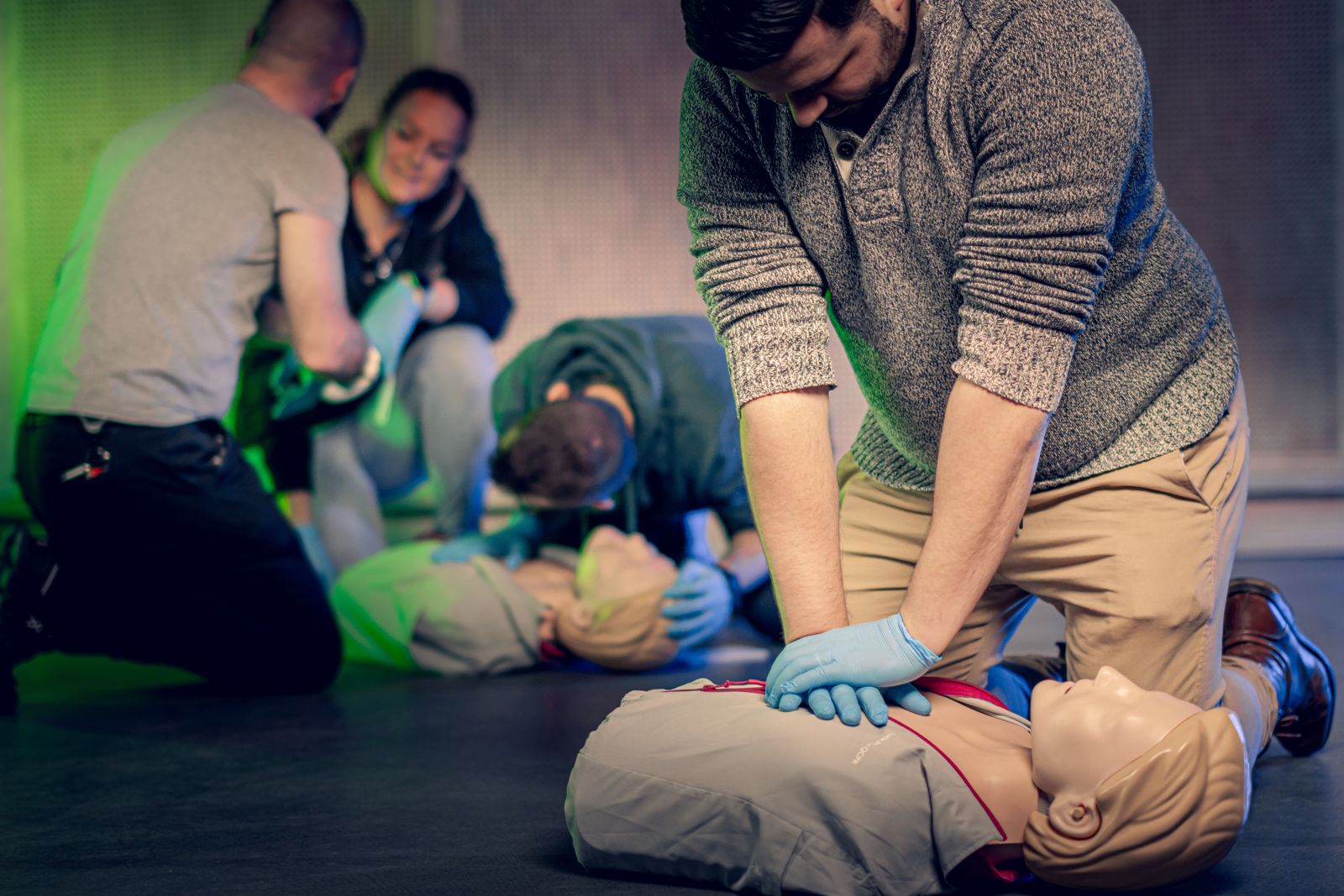
- If the person becomes unconscious and is not breathing normally: start resuscitation and use the AED immediately
Risk factors and prevention
High blood lipids, smoking, high blood pressure, excess weight, diabetes and lack of exercise are among the most important modifiable risk factors.
Our recommendation
Training: the BLS-AED-SRC Komplett course covers heart attack and stroke, while IVR Levels 2 and 3 go into acute cardiovascular conditions in greater depth. Occupational medicine and corporate health management: preventive check-ups and cardiovascular screenings help to identify risk factors early.
Frequently asked questions about Heart attack
Is a heart attack the same as cardiac arrest?
No. In a heart attack the heart usually keeps beating, but it can progress to cardiac arrest.
Should I drive the person to hospital myself?
No, call 144. The ambulance service can start treatment immediately and notify the hospital in advance.
How long can I wait?
Do not wait. If you suspect a heart attack, call for help immediately.
Can I give aspirin?
Medication should only be given after consulting the emergency call centre or medical professionals.
Do women have different symptoms?
More often atypical symptoms such as shortness of breath, nausea or back pain.
Can it be prevented?
Yes, through exercise, not smoking, a healthy diet and monitoring blood pressure, blood sugar and blood lipids.