
First aid and emergency medicine
Rescue breathing
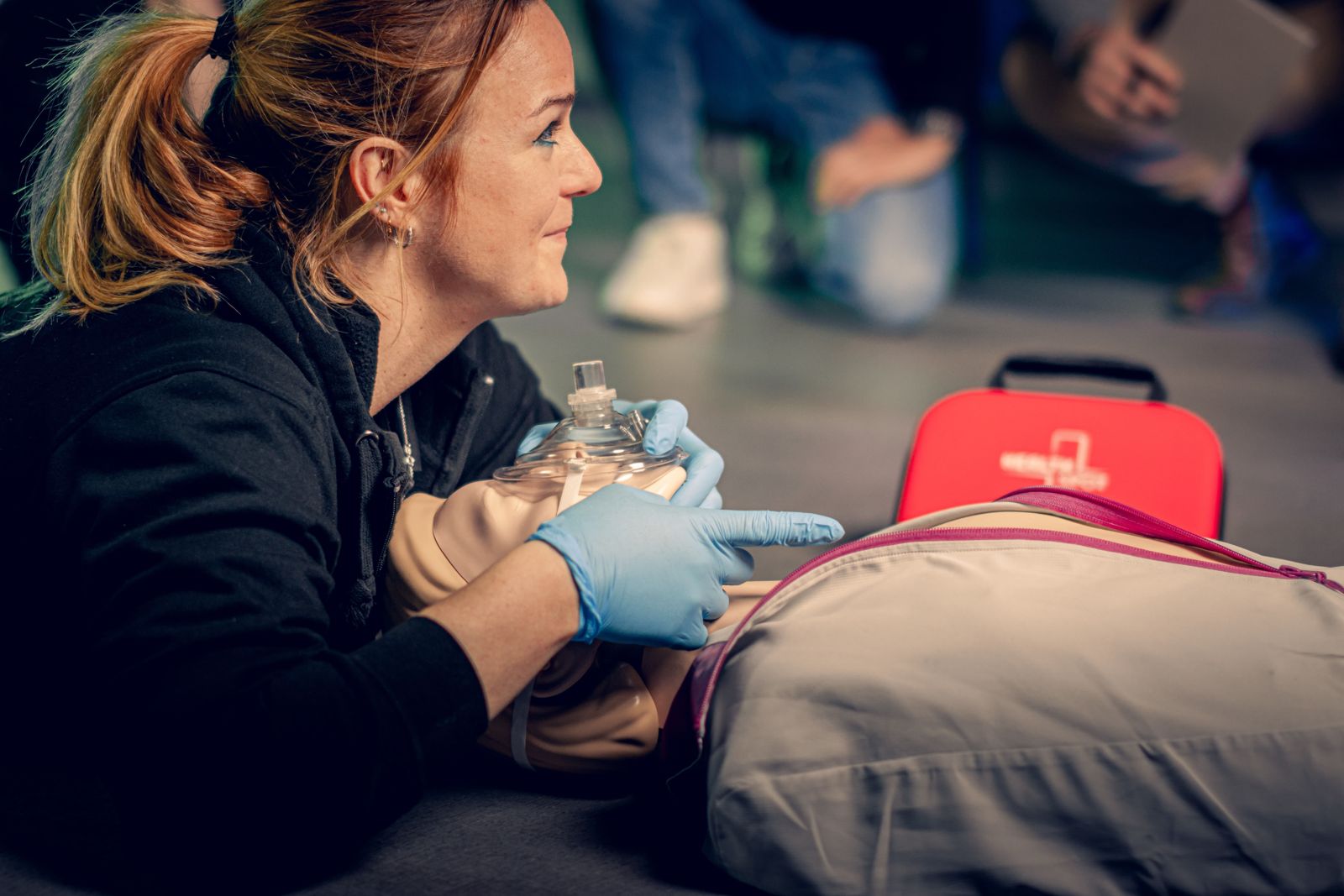
In rescue breathing, air is blown into the lungs of a person who is not breathing normally: mouth-to-mouth, mouth-to-nose or with aids such as a pocket mask or bag-valve mask. It complements chest compressions and is particularly important for children and drowning victims.
5 frequently asked questions · sources at the end of the article
What is rescue breathing?
Exhaled air still contains around 16% oxygen, which is enough to supply the body during rescue breathing.
Anatomy and background
The airway is opened by tilting the head back and lifting the chin. The air should go into the lungs, not the stomach, which is why each breath is given calmly over about one second until the chest visibly rises.
When are rescue breaths given?
- Unconsciousness and absent or abnormal breathing
- Children and infants: respiratory arrest is often the cause of cardiac arrest
- Drowning, suffocation, poisoning
How to give rescue breaths
- Tilt the head back and lift the chin
- Pinch the nose closed (mouth-to-mouth) or close the mouth (mouth-to-nose)
- Breathe in steadily for about 1 second until the chest rises
- Adults: 30 compressions to 2 rescue breaths
- Children and infants: first 5 rescue breaths, then 15:2 (if trained)
- Anyone who cannot or does not want to give rescue breaths: continuous chest compressions
Recommended training
Rescue breathing is an integral part of the BLS-AED-SRC Komplett course and optional in the Kompakt course. The bag-valve mask is practised in IVR Level 3.
Occupational health recommendation
In companies with bodies of water, childcare or choking risks, first aiders should be proficient in rescue breathing. Pocket masks kept with the AED lower the inhibition threshold.
Frequently asked questions about Rescue breathing
Do I have to give rescue breaths if I do not dare?
No. In that case, at least perform continuous chest compressions.
What aids are available?
A face shield, a pocket mask or, for professionals, a bag-valve mask.
Is rescue breathing practised on every course?
Always on the Komplett course, optionally on the Kompakt course.
What if the chest does not rise?
Correct the head position and try again; no more than two attempts, then continue with compressions.
Is the risk of infection high?
It is low; aids reduce it further.