
First aid and emergency medicine
Resuscitation
Resuscitation (CPR) covers all measures used in cardiac arrest to maintain the oxygen supply to the brain and heart, above all chest compressions, rescue breathing and defibrillation with an AED.
6 frequently asked questions · sources at the end of the article
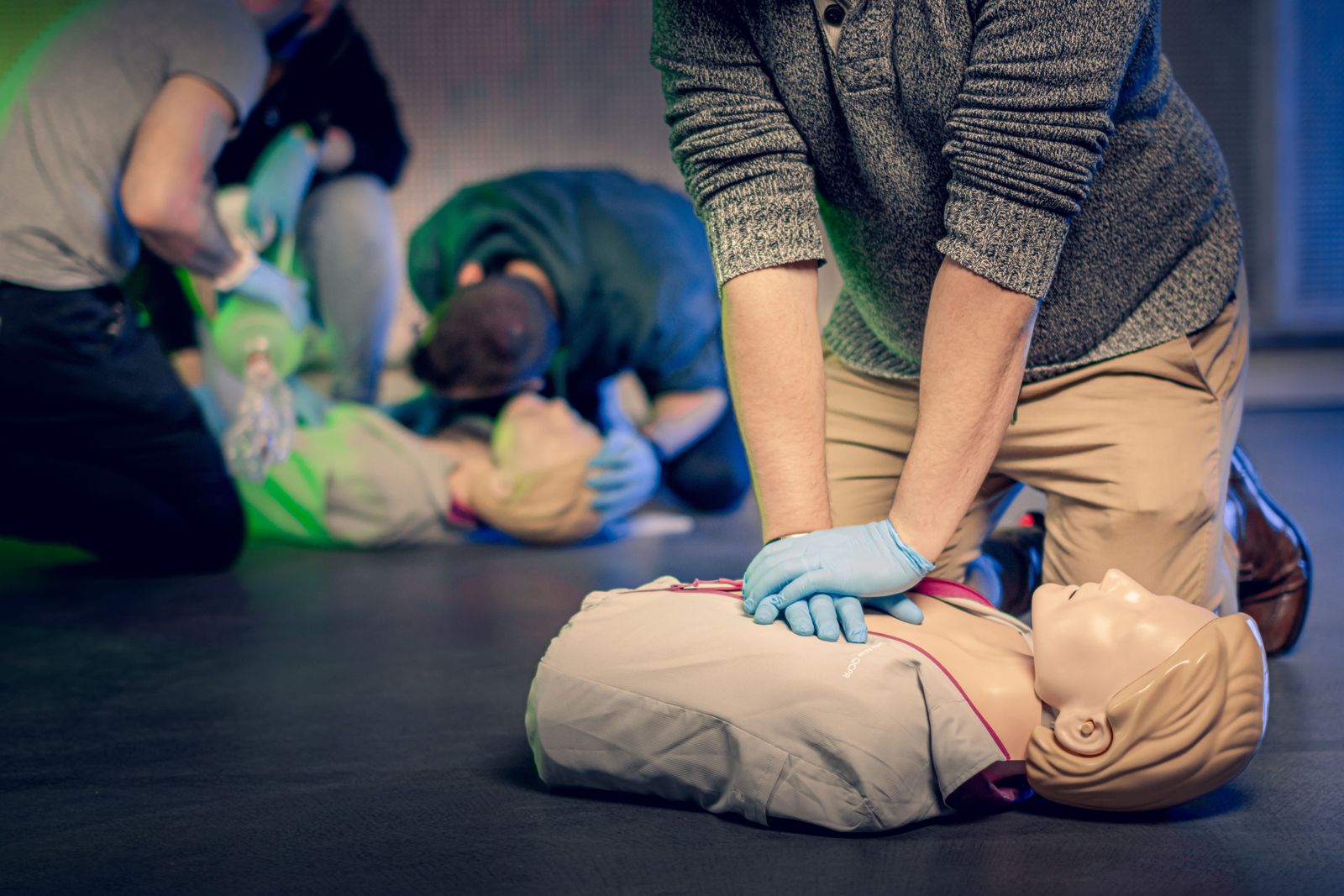
Basic life support (BLS)
In Switzerland, a uniform BLS-AED-SRC algorithm applies to first aiders for all age groups:
- Recognise the emergency: unconscious and not breathing normally
- Raise the alarm via 144
- Start chest compressions
- Use an AED as soon as one is available
- If trained: 30 compressions to 2 rescue breaths
Quality is decisive
Chest compressions are only effective with the correct rate (100–120/min), depth (5–6 cm in adults), full release and as few interruptions as possible. SRC courses use training manikins that give direct feedback.
Resuscitation in children
In children, resuscitation begins with five rescue breaths. Compressions are one third of the chest diameter deep, at a ratio of 15:2, and in infants with two thumbs.
Legal aspects
Anyone who fails to help a person in immediate danger of death, although it would be reasonable to do so, may be liable to prosecution under Art. 128 of the Swiss Criminal Code (StGB). The rule is "if in doubt, resuscitate". If there is a clear do-not-resuscitate order, it must be respected.
Frequently asked questions about Resuscitation
Is everyone allowed to resuscitate?
Yes. Everyone can and should help. Training provides confidence and improves quality.
Do I have to give rescue breaths?
All helpers should at least perform chest compressions. Those who have been trained give rescue breaths at a ratio of 30:2, which is particularly important for children and drowning victims.
What if ribs break?
This can happen. Such injuries are generally justified because a life is being protected.
How often should resuscitation be practised?
The SRC recommends repeating the course every 2 years and at least 30 minutes of practical training every year.
What does "in dubio pro REA" mean?
If in doubt, resuscitate, unless there are clear indications that the person has refused resuscitation.
When can I stop?
When the ambulance service takes over, the person starts breathing normally again or you can no longer continue.