
First aid and emergency medicine
Chest compressions
Chest compressions create an artificial blood flow during cardiac arrest. They have the highest priority in resuscitation and must start immediately.
5 frequently asked questions · sources at the end of the article
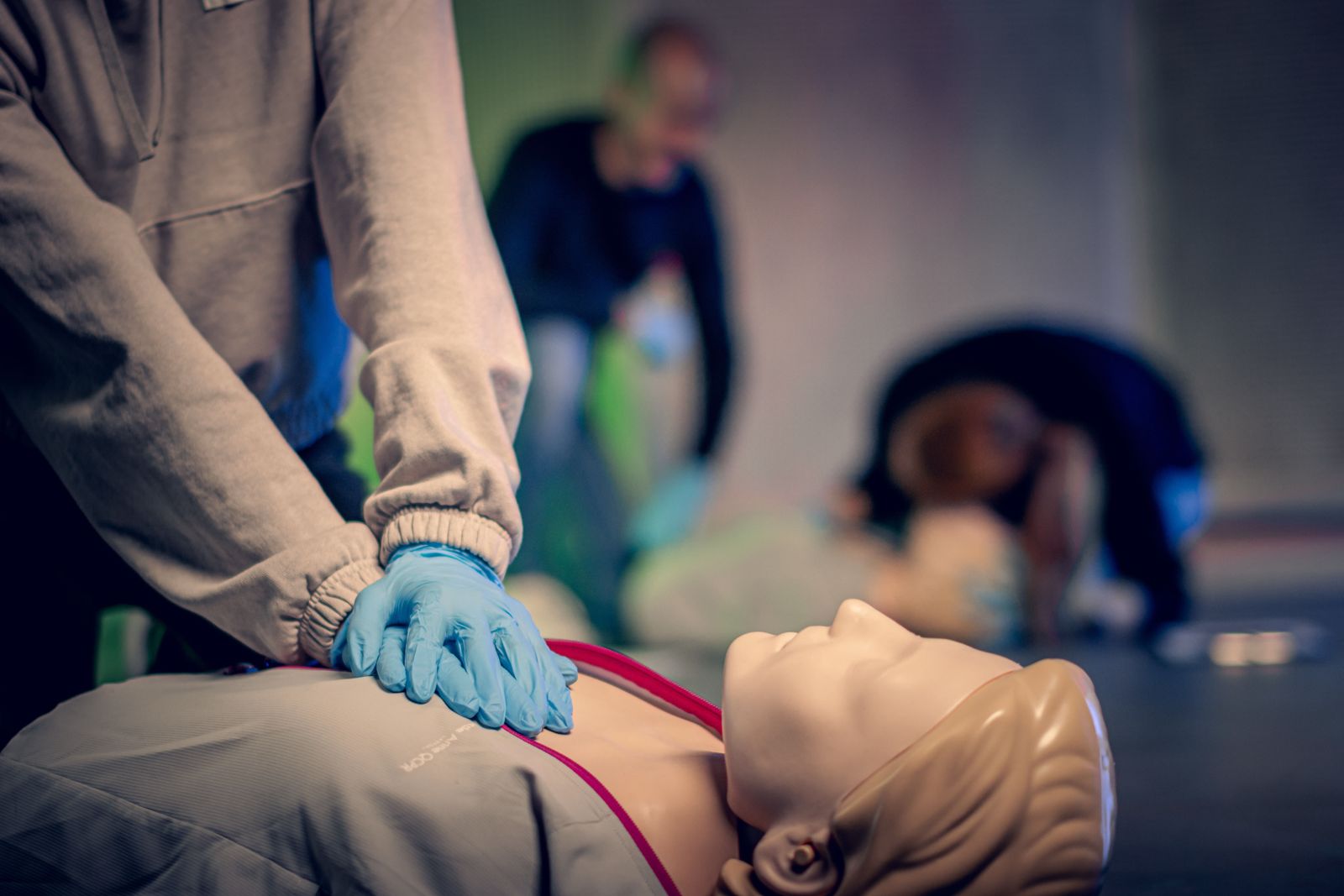
How to do it correctly
- Place the person on a firm surface, but do not pull adults out of bed
- Compression point: centre of the chest, lower half of the breastbone
- Rate: 100–120 per minute
- Depth in adults: 5–6 cm
- Release pressure completely after each compression; hands stay on the chest
- Compression and release in a 1:1 ratio
- Interrupt only for rescue breaths and defibrillation
Why take turns?
Chest compressions are tiring. Helpers should take turns every 2 minutes so that quality does not decline.
Guidance by telephone
The 144 emergency call centre can guide helpers through chest compressions over the phone. Switch on the speaker and follow the instructions.
Frequently asked questions about Chest compressions
Why does pressing help?
The heart is compressed between the breastbone and the spine. This keeps oxygenated blood flowing to the brain and heart.
How do I find the right rhythm?
100–120 per minute roughly matches the rhythm of well-known pop songs. In the course, you practise with feedback manikins.
Do I need to remove clothing?
Not necessarily for the compression point, but the upper body must be bare for the AED. A bra can be moved aside rather than removed.
How deep for children?
One third of the chest diameter; for infants, using two thumbs.
What is hands-only CPR?
Chest compressions without rescue breathing. It is the minimum measure for all helpers.