
First aid and emergency medicine
Epileptic seizure
In an epileptic seizure, nerve cells in the brain discharge uncontrollably. A major (tonic-clonic) seizure causes unconsciousness, stiffening and rhythmic jerking. It is important to protect the person from injury and then check their breathing.
5 frequently asked questions · sources at the end of the article
What is an epileptic seizure?
Seizures can occur in people with known epilepsy, but also as a result of fever (children), low blood sugar, alcohol withdrawal, head injury, lack of sleep or lack of oxygen, for example in cardiac arrest.
Anatomy and background
Normally, nerve cells work in an orderly manner. During a seizure, many fire at the same time. A seizure is often followed by a phase of exhaustion and confusion (postictal phase).
Symptoms and recognition
- Sudden fall, unconsciousness
- Stiffening, followed by rhythmic jerking
- Saliva around the mouth, tongue biting, wetting oneself
- Afterwards drowsiness, confusion
- Minor seizures: absence, fumbling, staring
First aid measures
- Stay calm, time the seizure
- Remove dangerous objects, cushion the head
- Do not restrain the person, do not put anything in their mouth
- After the seizure, check breathing; if breathing normally, recovery position
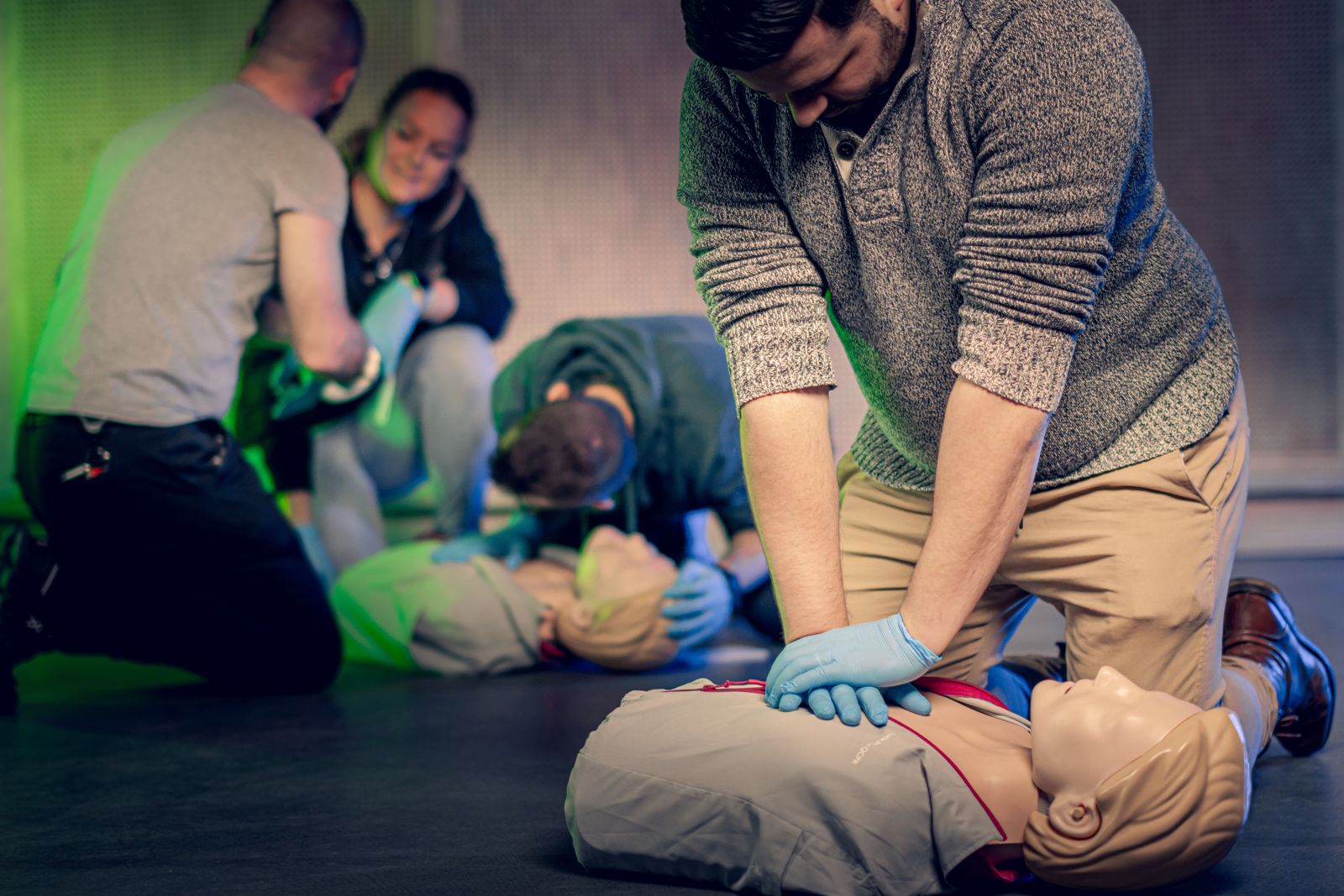
- No normal breathing: resuscitation and AED
- Call 144 for a first seizure, a seizure lasting over 5 minutes, a series of seizures, injury, pregnancy or lack of recovery
Recommended training
Seizures are part of IVR First Aid; the SRC Komplett course covers the link between seizures and cardiac arrest.
Occupational health recommendation
For people with epilepsy, fitness for driving, working at height, working with machinery or night work is assessed individually. Many activities are possible with good treatment control. Teams can be informed, on a voluntary basis, how to help during a seizure.
Frequently asked questions about Epileptic seizure
Do I always have to call 144?
Not necessarily for a person with known epilepsy and a short, typical seizure; if in doubt, yes.
Why should nothing be put in the mouth?
It can injure the teeth and helpers and block the airway.
How long does a seizure last?
Usually a few minutes; more than 5 minutes is an emergency.
Can a seizure be cardiac arrest?
Yes, a brief generalised seizure can be a sign, so always check breathing afterwards.
May I drive a car if I have epilepsy?
This is governed by the Road Traffic Licensing Ordinance (VZV); it is assessed by a doctor.