
First aid and emergency medicine
Unconsciousness
Unconsciousness describes a state in which a person is unresponsive and does not react appropriately to external stimuli. It can have various causes and is a potentially life-threatening emergency.
6 frequently asked questions · sources at the end of the article
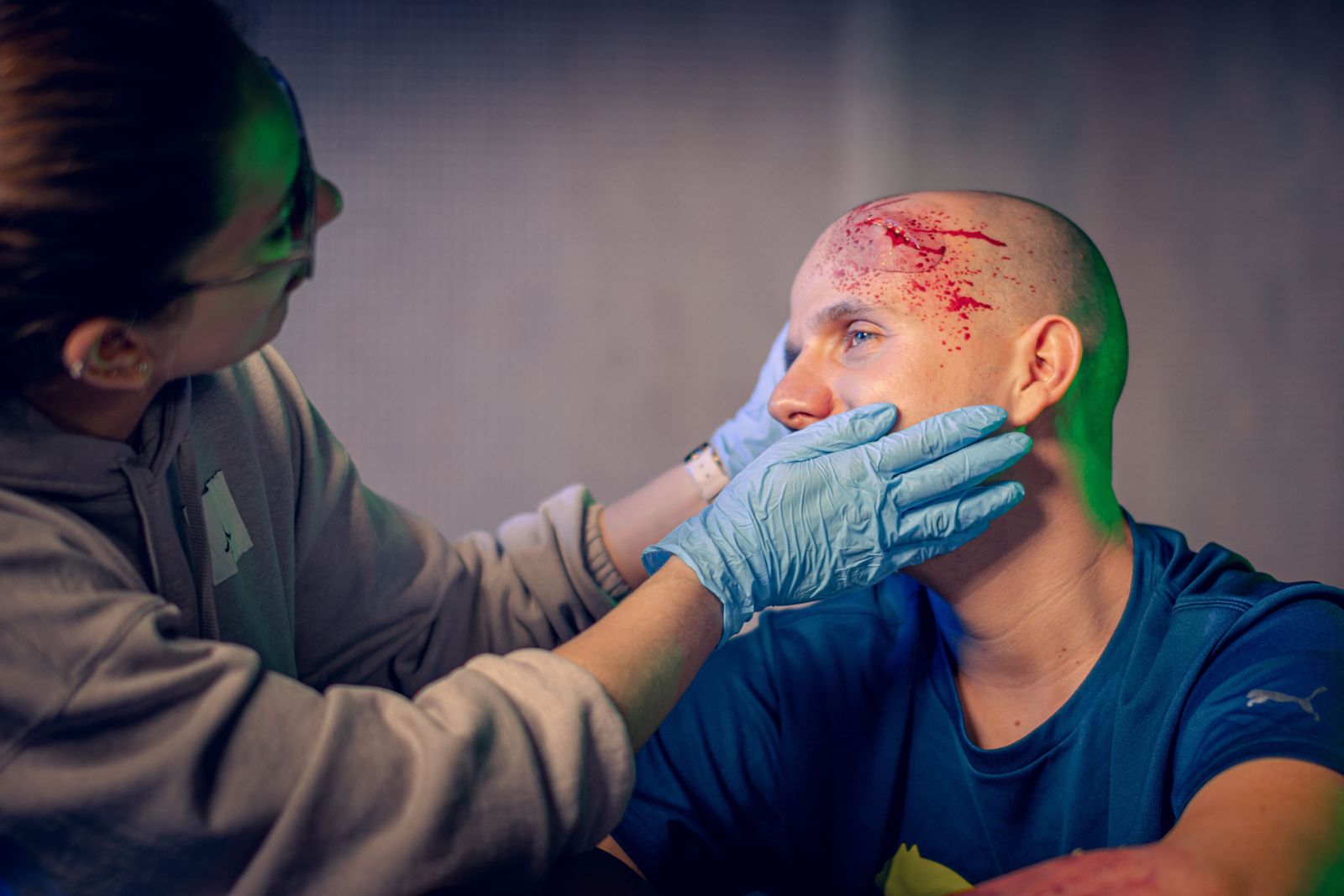
What happens during unconsciousness?
In unconsciousness, normal consciousness is significantly impaired. Possible causes include:
- Cardiac arrest
- Severe circulatory disorders
- Low blood sugar
- Neurological disorders
- Poisoning
- Head and brain injuries
- Other serious illnesses
First aiders often cannot determine the exact cause. Rapid assessment of breathing is therefore crucial.
First aid for unconsciousness
- Ensure your own safety.
- Speak to the person and check for a response.
- Call for help and alert the ambulance service.
- Open the airway and assess whether breathing is normal.
- If breathing is normal, place the person in a suitable recovery position and check breathing continuously.
- If normal breathing is absent, start resuscitation immediately and use an AED as soon as one is available.
Gasping is not normal breathing.
Importance for companies
Unconsciousness can also occur without prior warning signs. Workplace first aiders should in particular be able to distinguish between normal and abnormal breathing.
Frequently asked questions about Unconsciousness
Is unconsciousness always life-threatening?
Not every case of unconsciousness has the same cause. However, as a serious illness or cardiac arrest may be present, the situation must be treated as a medical emergency.
What do I do with an unconscious person who is breathing normally?
Alert the ambulance service, place the person in a suitable recovery position and check their breathing regularly.
What do I do if the person is not breathing normally?
Start resuscitation immediately, alert the ambulance service or have someone else do so, and use an AED.
Can I give an unconscious person something to drink?
No. An unconscious person must not be given any drinks or food.
How does fainting differ from unconsciousness?
Fainting is a brief loss of consciousness, usually due to circulatory weakness; it must nevertheless be taken seriously.
Should I leave the person alone to get help?
Preferably not: call loudly for help and raise the alarm by mobile phone on speaker.