
First aid and emergency medicine
Recovery position
The recovery position (also known as the stable side position) keeps the airway of an unconscious person who is breathing normally clear. Vomit, blood or saliva can drain away, and the tongue does not fall back into the throat.
5 frequently asked questions · sources at the end of the article
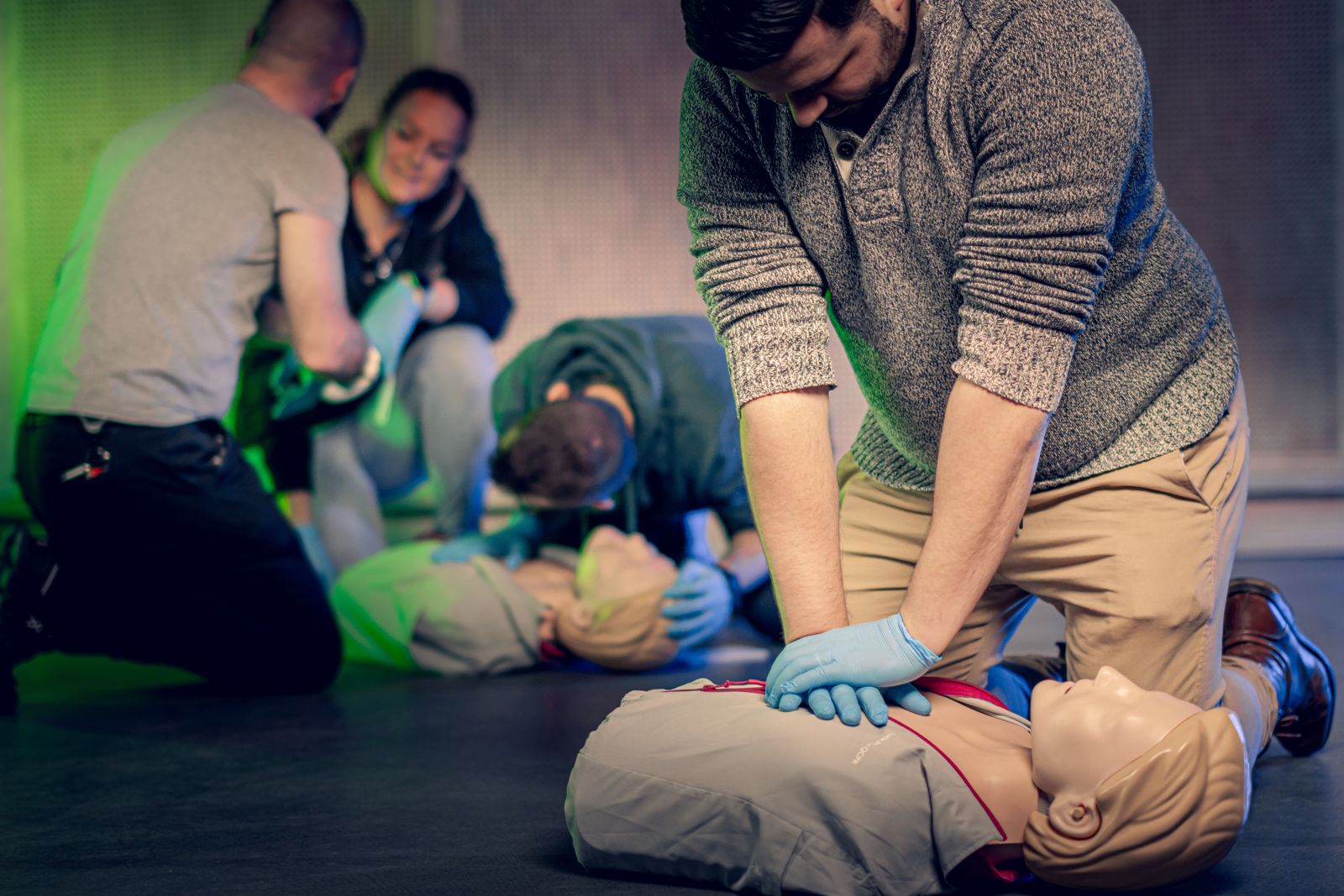
What is the recovery position?
The recovery position is only used if the person is breathing normally. If the person is not breathing normally, start resuscitation immediately.
Anatomy and background
When an unconscious person lies on their back, the muscles relax; the tongue and epiglottis can block the throat. In the side position with the head tilted back and the mouth facing downwards, the airway stays open.
When is the position used?
- The person does not respond to voice or touch
- Breathing is normal (regular, no gasping)
- No suspicion of cardiac arrest
How to do it
- Kneel next to the person, remove glasses and hard objects
- Place the near arm at a right angle, pointing upwards
- Bring the far arm across the chest, back of the hand against the cheek
- Bend the far leg and roll the person towards you
- Tilt the head back, mouth slightly downwards
- Call 144, continuously check breathing, cover the person
- If breathing becomes abnormal: turn onto the back and start resuscitation
Recommended training
The recovery position is a mandatory part of the BLS-AED-SRC Komplett course and of IVR First Aid.
Occupational health recommendation
Especially for lone working, night shifts and large sites, it is crucial that first aiders can distinguish between normal and abnormal breathing.
Frequently asked questions about Recovery position
Is the recovery position allowed if a spinal injury is suspected?
If the airway is at risk, keeping it clear takes priority; turn the person carefully.
Where can I learn the recovery position?
In the BLS-AED-SRC Komplett course and in IVR courses.
How often do I check breathing?
Continuously, until help arrives.
Which side should the person lie on?
In principle it does not matter; pregnant women should lie on their left side.
Are there alternatives?
There are various versions depending on the teaching approach; what matters is a clear airway and stability.