
Examinations and measurements
Fit testing
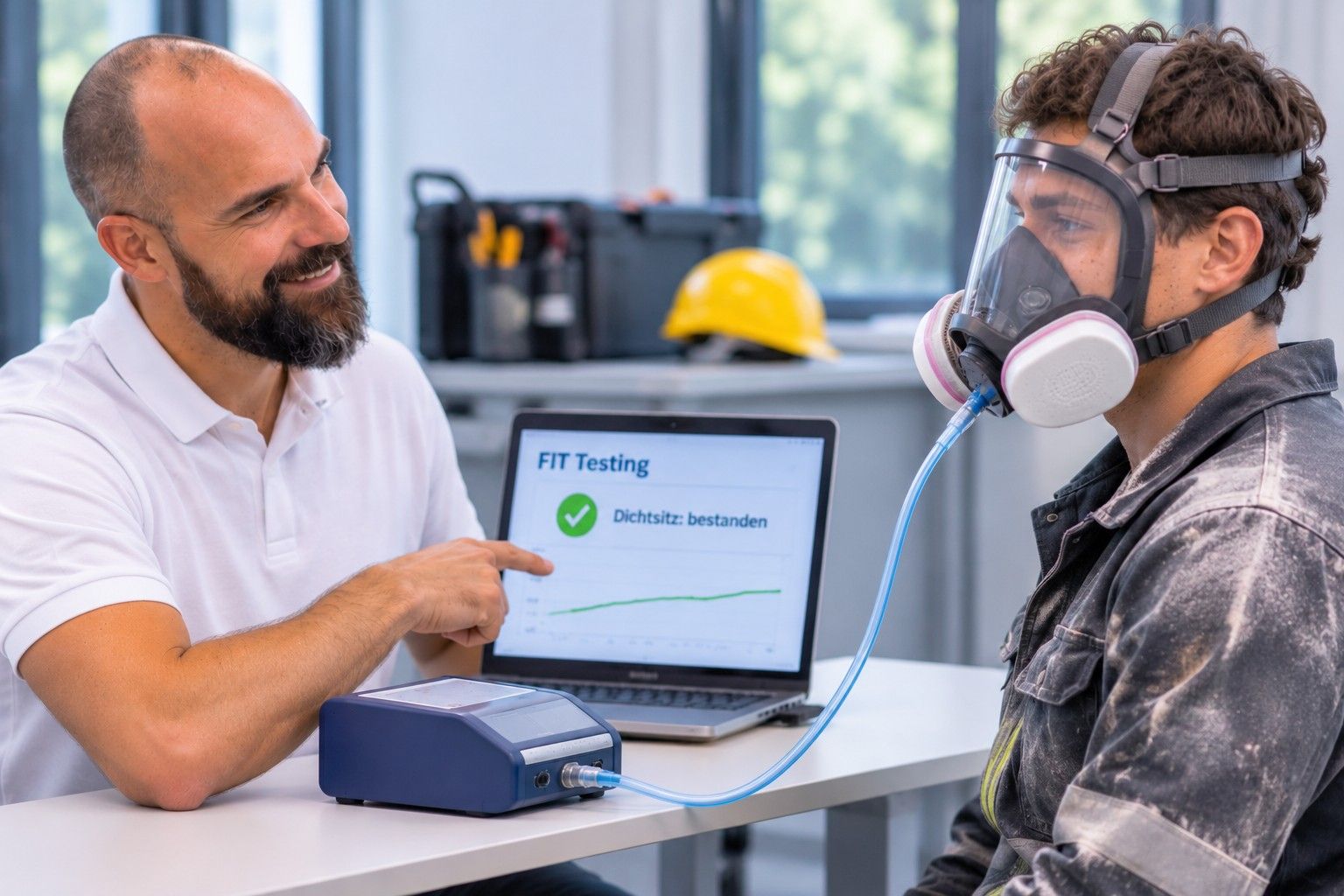
Fit testing checks how well tight-fitting respirator masks seal on the individual wearer. Only a tightly sealing mask provides reliable protection: the best filter class is useless if air flows past the edge.
5 frequently asked questions · sources at the end of the article
Why is it important?
Face shape, beards, scars, weight changes or the wrong size can lead to leaks. Studies show that a considerable proportion of wearers choose a poorly fitting mask without a test.
Methods
- Qualitative: taste test with a test aerosol (e.g. bitter or sweet substance); if the person can taste it, the mask is leaking
- Quantitative: a measuring device counts particles inside and outside the mask and calculates the fit factor
Procedure
- Select mask models and sizes
- Instruction on correct donning and the user seal check
- Exercises: breathing normally and deeply, turning and nodding the head, talking, bending forward
- Document the result: pass/fail with model and size
- Duration at Healthspot: 30–60 minutes, on site
Legal framework
The employer must provide suitable PPE and ensure that it is used as intended (Art. 5 of the Accident Prevention Ordinance (VUV)). Fit testing is a recognised means of demonstrating that the mask is suitable for the individual.
Frequently asked questions about Fit testing
Who needs fit testing?
Employees who wear tight-fitting respirator masks, e.g. FFP2/FFP3 or half and full face masks.
How long does it take?
30 to 60 minutes per person.
How often should it be repeated?
When changing the mask type, in case of weight or facial changes, and regularly in line with company requirements.
Can I be tested with a beard?
A beard in the sealing area prevents a tight seal; the test then usually fails.
What is the difference from the user seal check?
The user seal check is carried out by the wearer every time they put the mask on; fit testing is a verified measurement.