
Anatomy and first responder care
Circulation
The circulation (blood circulation) is the closed system of heart and blood vessels in which blood circulates. It supplies all organs with oxygen and nutrients and carries away waste products.
4 frequently asked questions · sources at the end of the article
What is the circulation?
A distinction is made between the pulmonary circulation (right heart → lungs → left heart) and the systemic circulation (left heart → body → right heart). Arteries carry blood away from the heart, veins carry it towards the heart, and exchange takes place in the capillaries.
Anatomy and background
An adult has about 5 to 6 litres of blood. For the circulation to work, it needs a pump (heart), sufficient volume (blood) and intact, properly regulated blood vessels. If one of these factors fails, circulatory failure occurs.
Recognising disorders
- Circulatory weakness: dizziness, pallor, blacking out
- Fainting (syncope)
- Shock: cold sweat, rapid weak pulse, restlessness
- Cardiac arrest: unconsciousness, no normal breathing
Measures
- For dizziness or fainting: lie down, raise the legs
- Look for and treat the cause (e.g. bleeding)
- For signs of shock: call 144, lay the person flat, keep them warm
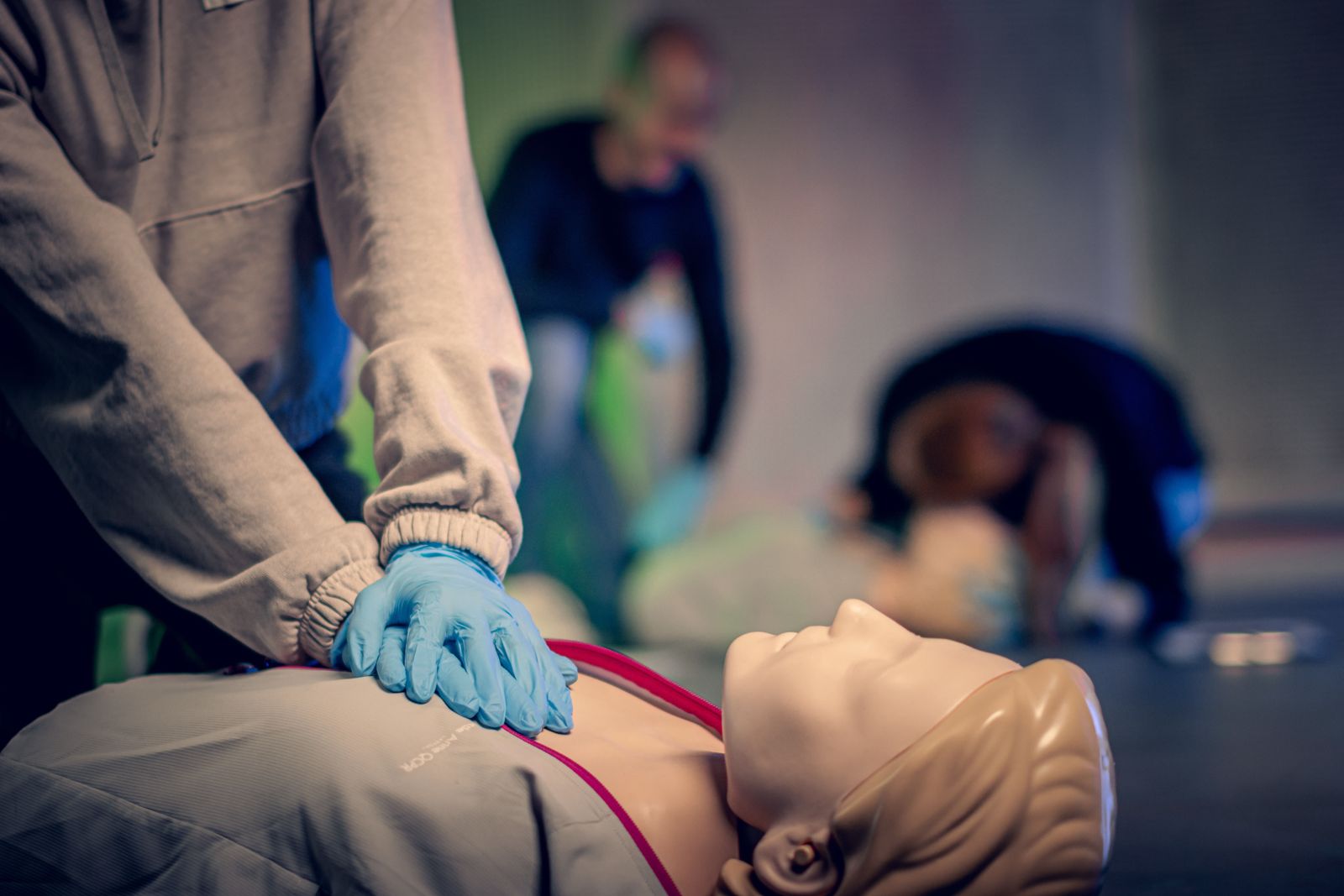
- For cardiac arrest: resuscitation and AED
Recommended training
Circulatory emergencies are part of all BLS-AED-SRC and IVR courses.
Occupational health recommendation
Working in heat, prolonged standing, shift work and dehydration put strain on the circulation. Occupational medicine checks blood pressure and pulse and recommends prevention measures.
Frequently asked questions about Circulation
How much blood does a person have?
Adults about 5–6 litres.
What is the difference between arteries and veins?
Arteries carry blood away from the heart, veins carry it towards the heart.
What is fainting?
A brief loss of consciousness due to temporarily reduced blood flow to the brain.
What should I do in case of circulatory collapse?
Lie the person down, raise the legs, observe; if they do not recover, call 144.