
Anatomy and first responder care
Cardiovascular system
The cardiovascular system consists of the heart and the blood vessels. It supplies every cell with oxygen and nutrients, removes metabolic waste products and ensures that all organs can perform their functions.
8 frequently asked questions · sources at the end of the article
How is the heart structured?
The heart is a powerful hollow muscle, roughly the size of a clenched fist. It sits in the chest between the two lungs, slightly to the left behind the breastbone. The heart consists of four chambers:
- right atrium
- right ventricle
- left atrium
- left ventricle
Heart valves are located between the atria and the ventricles. They work much like non-return valves and ensure that blood always flows in the right direction.
What does the heart do?
The main task of the heart is to pump blood through the entire body. With every heartbeat, blood is transported through a widely branched network of arteries, veins and the finest capillaries. This means that:
- oxygen is distributed
- nutrients are transported
- hormones are distributed throughout the body
- metabolic waste products are removed
- carbon dioxide is returned to the lungs
Without this continuous blood flow, our organs would stop functioning within just a few minutes.
The pulmonary and systemic circulation
Pulmonary circulation: the right side of the heart pumps oxygen-poor blood into the lungs. There, carbon dioxide is released and fresh oxygen is taken up. The oxygen-rich blood flows back into the left side of the heart.
Systemic circulation: the left ventricle pumps the oxygen-rich blood at high pressure through the main artery (aorta) into the entire body. The oxygen-poor blood then flows back to the heart through the veins.
Why is oxygen so important?
Every cell in the body needs oxygen to produce energy. The brain, heart and kidneys are particularly sensitive. The brain has practically no oxygen reserves. After just a few minutes without adequate blood flow, nerve cells begin to die permanently.
The electrical conduction system
The rhythm is set by the sinus node. It generates electrical impulses that spread through the atria and the AV node into the ventricles. If this system becomes unbalanced, cardiac arrhythmias can occur. Some are harmless, while others can lead to cardiac arrest within a few seconds.
How hard does the heart work?
At rest, the heart of a healthy adult beats on average between 60 and 100 times per minute. With each heartbeat, around 60 to 90 millilitres of blood are ejected, which is about 5 litres per minute at rest. In trained athletes, values of over 20 litres per minute are possible during exertion.
Cardiac arrest and heart attack
In cardiac arrest, the heart loses its pumping function. The affected person loses consciousness within a few seconds. Without immediate help, cardiac arrest is fatal.
A heart attack is caused by the blockage of a coronary artery. The heart usually keeps beating at first but no longer receives enough oxygen. If left untreated, it can lead to cardiac arrest.
Chest compressions and AED
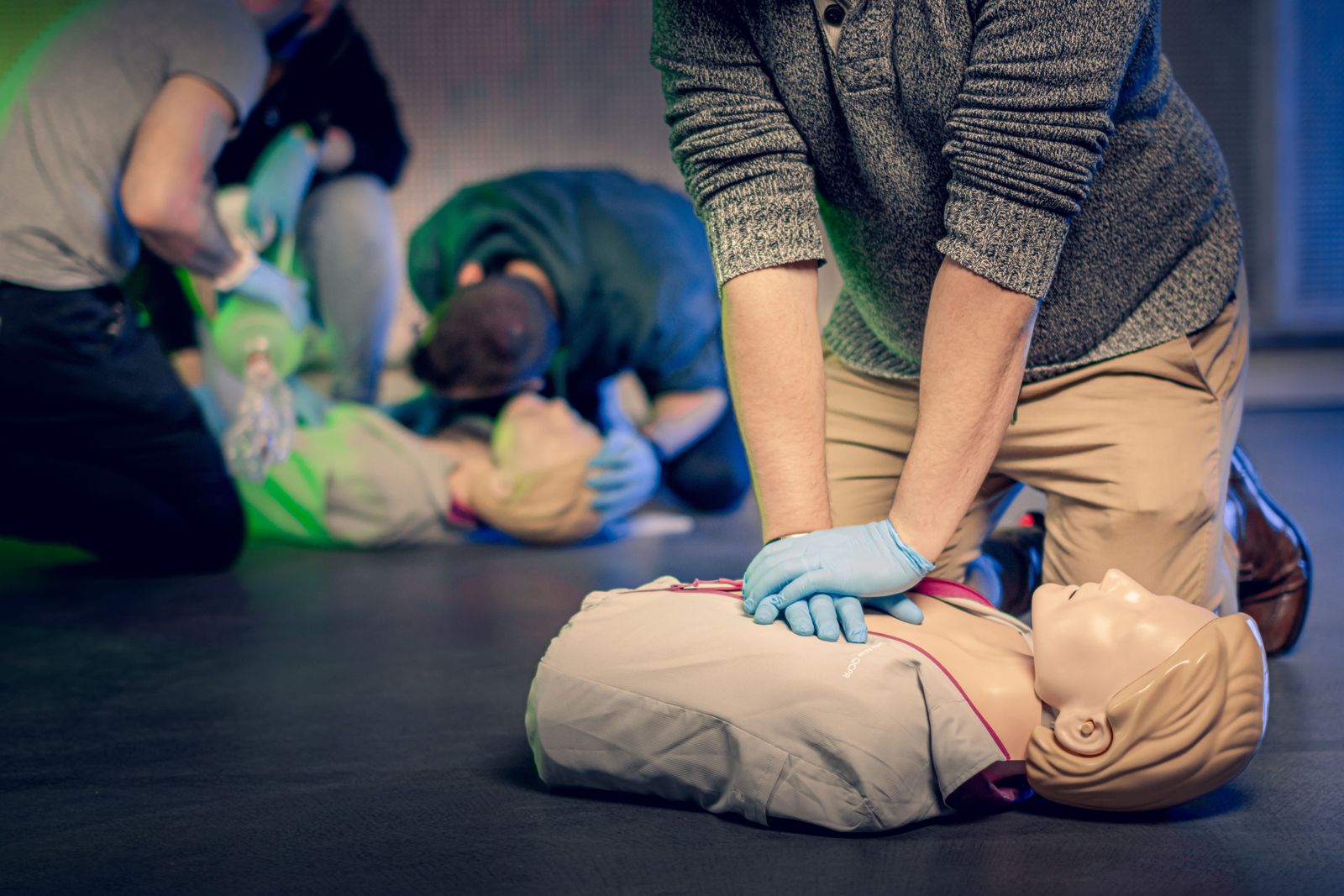
Forceful compressions of the chest create an artificial blood flow that continues to carry oxygen to the brain and the heart muscle. In cardiac arrest, chest compressions have the highest priority.
An AED analyses the heart rhythm automatically and only enables a shock if it is medically indicated. This is why the devices can also be used safely by laypeople.
Frequently asked questions about Cardiovascular system
What is the cardiovascular system?
The cardiovascular system consists of the heart and the blood vessels. It transports oxygen, nutrients and hormones throughout the body and at the same time removes carbon dioxide and metabolic waste products.
How often does the heart beat?
In healthy adults, the heart beats on average between 60 and 100 times per minute at rest. During physical exertion, the heart rate rises in line with the body's oxygen demand.
How much blood does the heart pump?
At rest, the heart pumps about five litres of blood per minute. During physical exertion, this output can increase considerably.
What is the difference between a heart attack and cardiac arrest?
In a heart attack, a coronary artery becomes blocked. The heart usually continues to work at first. In cardiac arrest, the pumping function of the heart stops, causing the circulation to collapse.
Why is the brain particularly at risk in cardiac arrest?
The brain has hardly any oxygen reserves and depends on a continuous blood supply. After just a few minutes without an adequate oxygen supply, permanent damage can occur.
Can anyone use an AED?
Yes. Automated external defibrillators are specifically designed for use by laypeople. They give clear voice and in some cases visual instructions and only deliver a shock if it is medically required.
What is a heart rhythm?
The regular electrical excitation set by the sinus node.
What does an ECG measure?
The electrical activity of the heart. It is part of many occupational health examinations.