
Anatomy and first responder care
Heart
The heart is a fist-sized hollow muscle in the middle of the chest. At rest it beats around 60 to 100 times per minute, pumping around five litres of blood per minute through the body.
5 frequently asked questions · sources at the end of the article
How is the heart structured?
The heart consists of two halves, each with an atrium and a ventricle. The right half pumps blood into the lungs, the left half into the systemic circulation. Four heart valves ensure that the blood only flows in one direction.
Anatomy and background
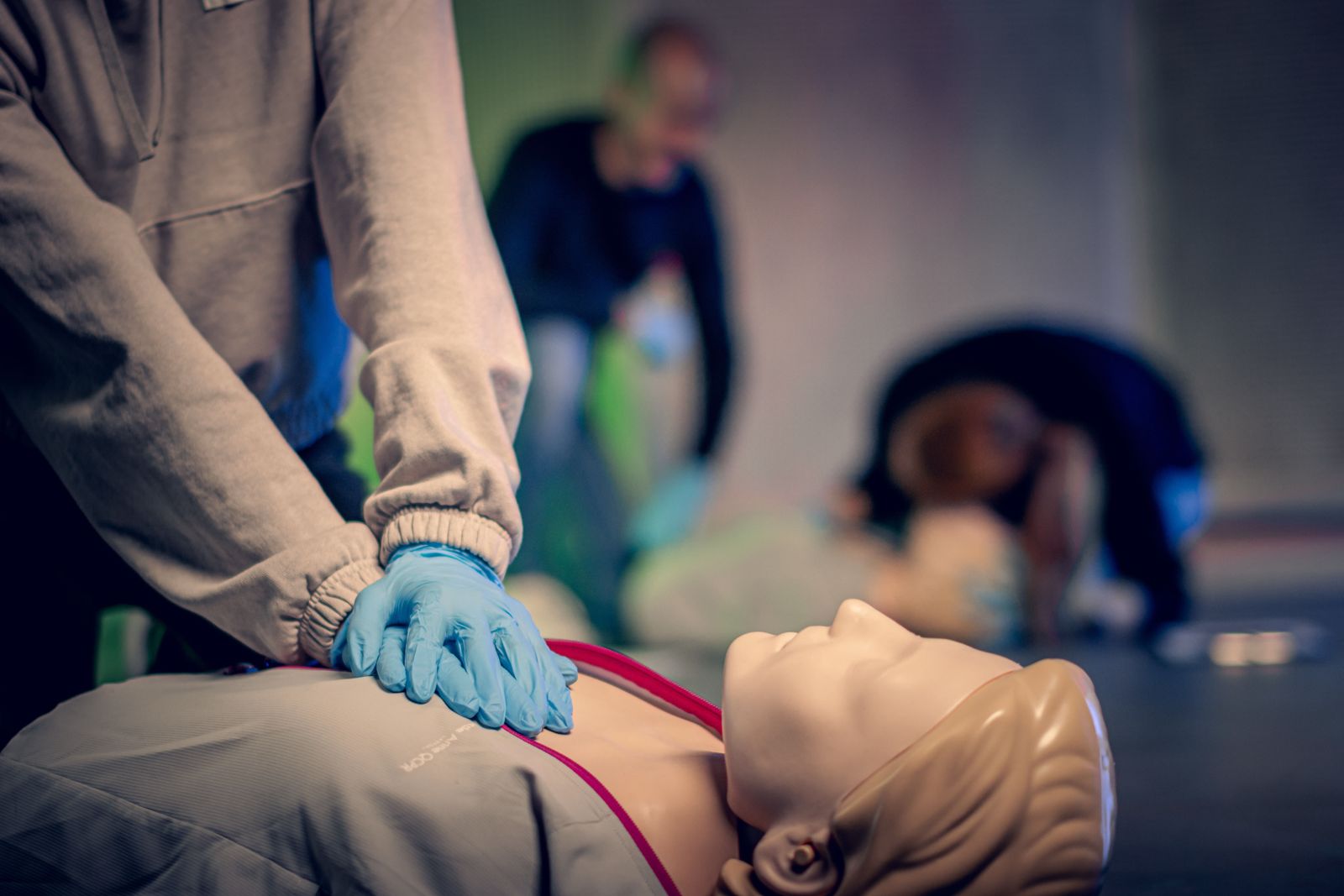
The heart muscle is supplied with blood via the coronary arteries. The rhythm is set by the sinus node; the electrical impulse travels via the AV node into the ventricles. The heart lies behind the breastbone between the lungs, which is why chest compressions are applied to the middle of the chest.
Warning signs of heart disease
- Chest pain, feeling of pressure or tightness
- Racing heart, palpitations
- Shortness of breath on exertion, swollen legs (heart failure)
- Fainting
- Sudden cardiac arrest
What to do in an emergency
- Chest pain: call 144, reassure the person, raise the upper body
- Unconscious and not breathing normally: chest compressions and AED
- Racing heart with dizziness or chest pain: seek medical help
Recommended training
Participants learn how the heart works and how to support it in an emergency in BLS-AED-SRC courses; IVR Level 2 and 3 cover cardiac emergencies in more depth.
Occupational health recommendation
An ECG and checks of blood pressure and blood lipids help to detect heart risks early. For activities involving high responsibility (railways, driving services, fire services with respiratory protection), heart health is part of the aptitude assessment.
Frequently asked questions about Heart
How big is the heart?
About the size of the person's fist.
How often does it beat?
At rest, around 60–100 times per minute.
Where is the heart located?
In the middle of the chest behind the breastbone, slightly offset to the left.
How is the heart muscle supplied with blood?
Via the coronary arteries.
What sets the heart rhythm?
The sinus node in the right atrium.