
Anatomy and first responder care
Lungs
The lungs are the organ of gas exchange. In around 300 million alveoli, oxygen enters the blood and carbon dioxide is released. At rest, an adult breathes about 12 to 20 times per minute.
4 frequently asked questions · sources at the end of the article
How are the lungs structured?
The lungs consist of two lungs, the right with three lobes and the left with two. They lie in the chest and are surrounded by the pleura.
Anatomy and background
The air we breathe passes through the trachea and bronchi into the alveoli. Their extremely thin walls are surrounded by capillaries, where gas exchange takes place. The breathing movement is generated mainly by the diaphragm and the intercostal muscles.
Warning signs
- Shortness of breath, rapid breathing
- Coughing, sputum, wheezing
- Chest pain when breathing
- Bluish lips
- With a chest injury: one-sided breathing movement, shortness of breath
Measures
- Raise the upper body and reassure the person
- If short of breath, call 144
- Chest injuries: cover open wounds and position the person to ease breathing
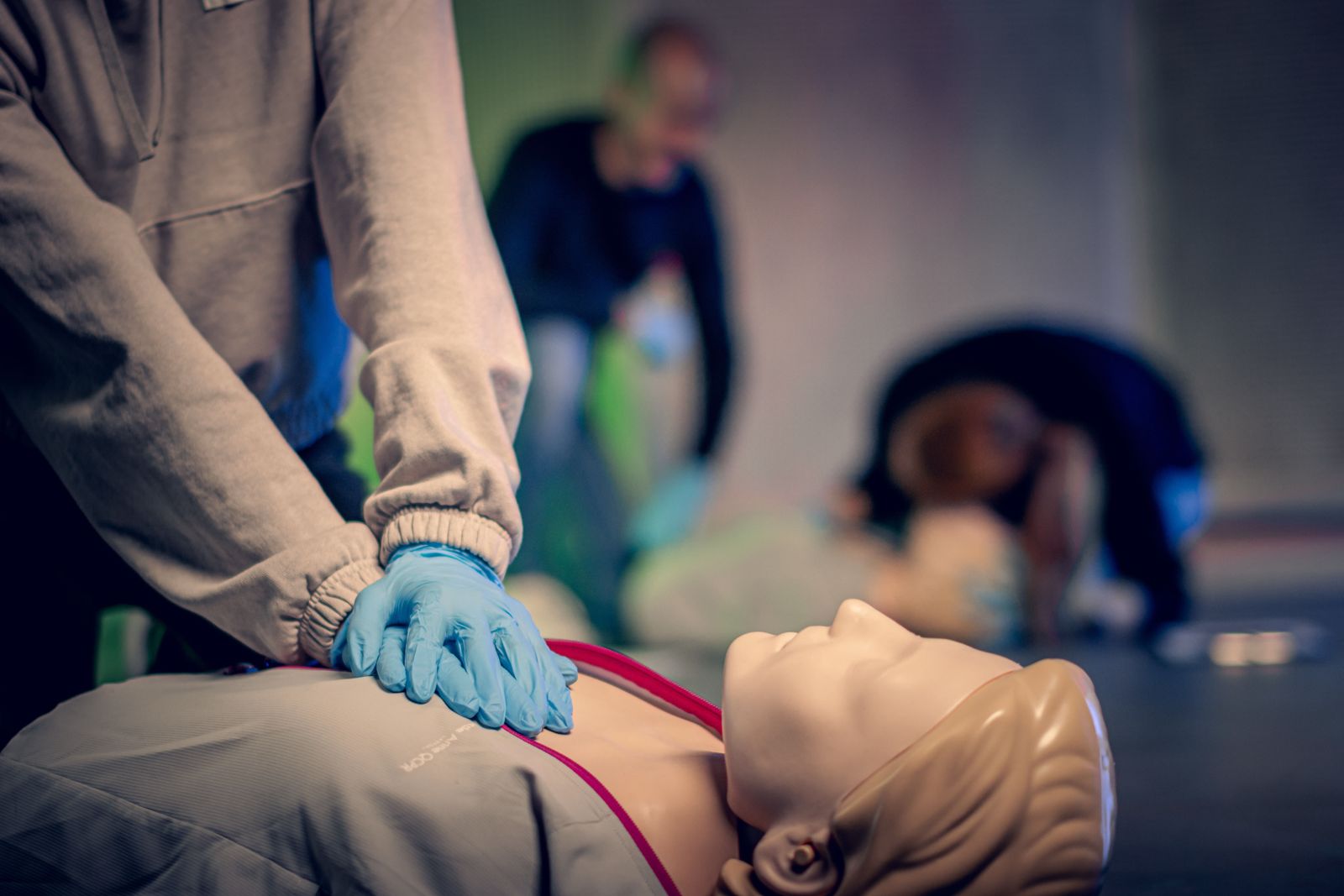
- If unconscious and not breathing normally: resuscitation
Recommended training
Breathing emergencies and chest injuries are part of the IVR levels; oxygen administration and pulse oximetry follow in Level 3.
Occupational health recommendation
In the workplace, the lungs are at risk from dusts (e.g. quartz, asbestos, wood, flour), gases, smoke and fumes. Occupational health surveillance includes lung function tests (spirometry), in some cases X-rays, and assessment of fitness to wear respiratory protection.
Frequently asked questions about Lungs
How many lungs are there?
Two: three lobes on the right, two on the left.
Where does gas exchange take place?
In the alveoli.
Which substances damage the lungs in the workplace?
Among others, quartz dust, asbestos, wood and flour dust, welding fumes and solvent vapours.
How are the lungs examined?
With a lung function test (spirometry).