
First aid and emergency medicine
Hypothermia
In hypothermia, the core body temperature drops below 35 °C. The lower the temperature, the more consciousness, breathing and heart rhythm are affected.
5 frequently asked questions · sources at the end of the article
What is hypothermia?
Hypothermia occurs when the body loses more heat than it produces, due to cold, wet conditions, wind, immobility or cold water. Even at mild temperatures, injured, intoxicated or older people can cool down.
Anatomy and background
The body protects its core by narrowing the blood vessels in the skin and producing heat through shivering. If the core temperature continues to fall, shivering stops, consciousness becomes clouded and the heart becomes prone to arrhythmias.
Symptoms and recognition
- Mild (35–32 °C): shivering, pallor, onset of confusion
- Moderate (32–28 °C): shivering stops, drowsiness, clouded consciousness
- Severe (below 28 °C): unconsciousness, barely detectable breathing and pulse
- Cold skin, including on the torso
First aid measures
- Protect from further heat loss: wind, wet, ground
- Carefully remove wet clothing or insulate
- Wrap in blankets and a rescue blanket, cover the head
- Keep the person as still and horizontal as possible, do not move them actively
- Alert person: warm, sweetened drinks
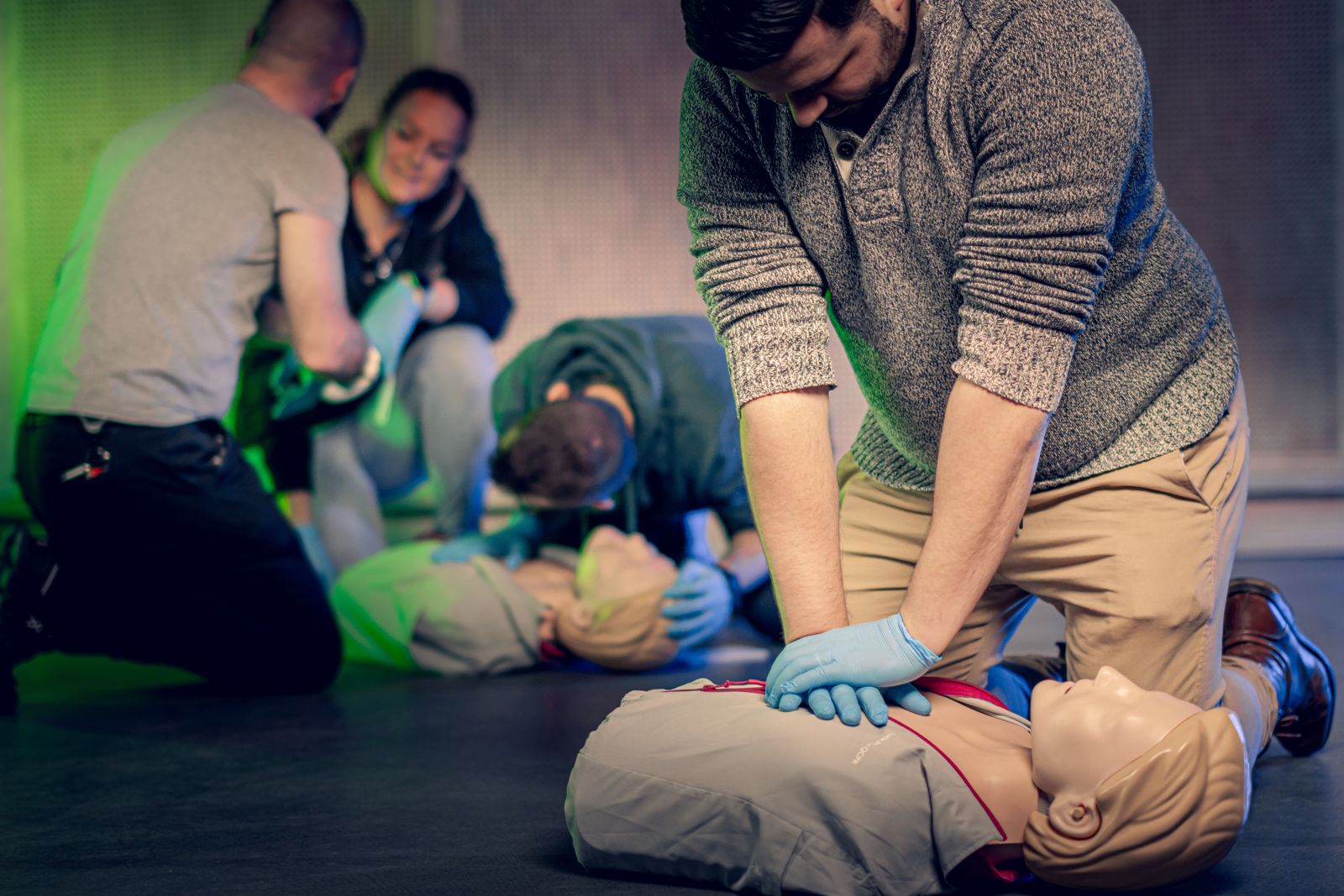
- Call 144; if the person is not breathing normally, start resuscitation
Recommended training
Cold-related emergencies are part of IVR training and are suitable as a module for companies with outdoor work, work in cold stores or on water.
Occupational health recommendation
For work in cold conditions (construction, cold stores, forestry), cold-protective clothing, warm-up breaks and information are part of health protection. From an occupational medicine perspective, advice is advisable for people with pre-existing conditions such as cardiovascular or circulatory disorders.
Frequently asked questions about Hypothermia
At what temperature is it considered hypothermia?
At a core body temperature below 35 °C.
Should I actively rub or move the person?
No. Keep them still and insulated to avoid arrhythmias.
Can I give alcohol?
No. Alcohol dilates the blood vessels and increases heat loss.
How long should resuscitation continue in hypothermia?
Until the ambulance service takes over. Severely hypothermic people can survive even after prolonged resuscitation.
Does a rescue blanket help?
Yes, it reduces heat loss, but it does not replace insulation against the ground and wet conditions.