
First aid and emergency medicine
Consciousness check
The consciousness check is used to determine whether a person is awake and responsive or whether they have impaired consciousness or are unconscious.
5 frequently asked questions · sources at the end of the article
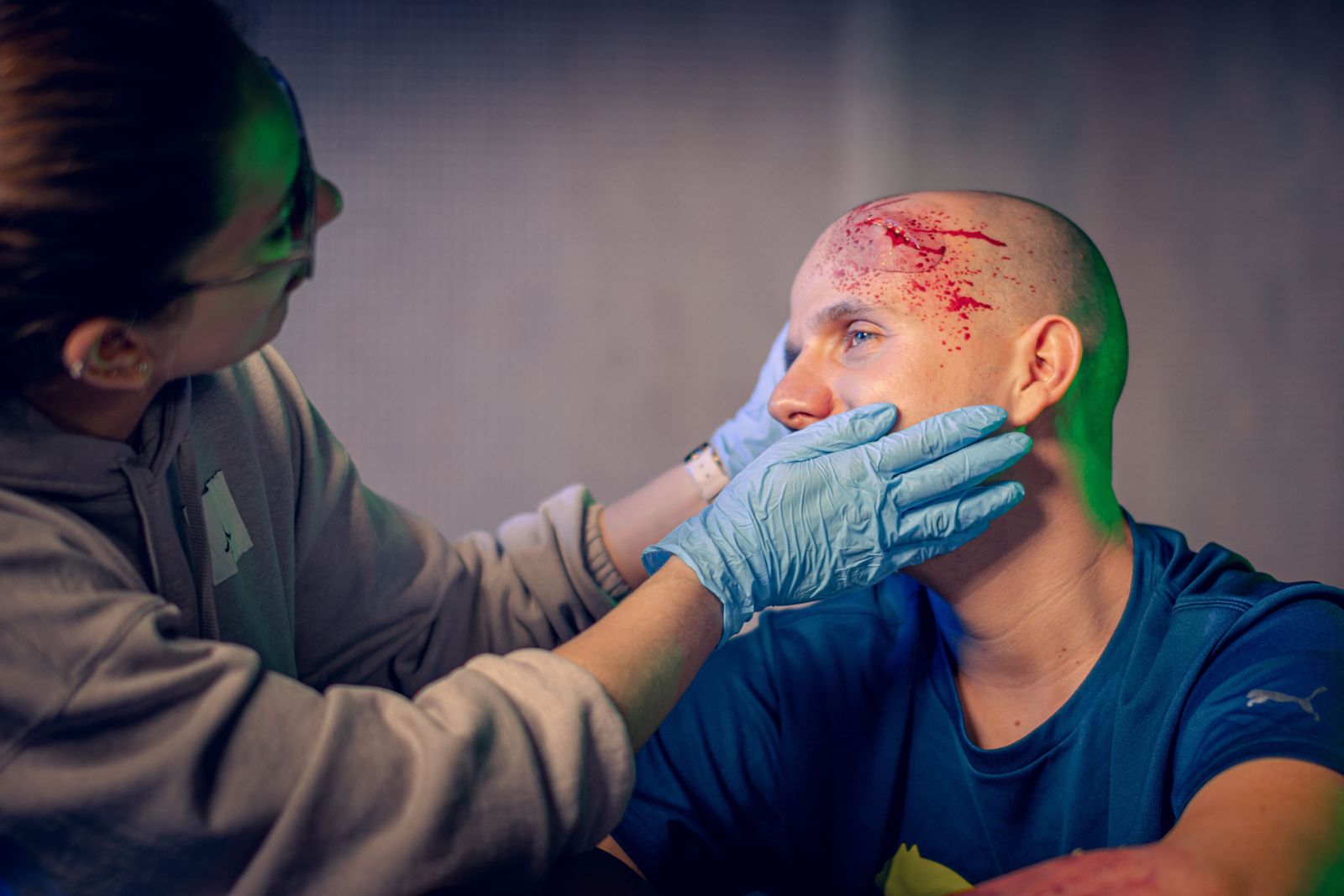
How is consciousness checked?
If a person is motionless, first check that the surroundings are safe. Then speak to the person loudly.
If there is no response, you can carefully touch or shake them by the shoulders, provided this does not create additional danger in the situation.
If the person does not respond, further help must be organised immediately. Then assess whether they are breathing normally.
Why is the consciousness check important?
The consciousness check is a fundamental part of the emergency assessment. It helps to recognise serious conditions. A lack of response may indicate, among other things, unconsciousness or cardiac arrest.
Importance for companies
The consciousness check is one of the basic skills that can be taught in practice in first aid training. What matters is that first aiders then initiate the right measures.
Frequently asked questions about Consciousness check
How do I check whether a person is unconscious?
Speak to the person loudly and carefully check whether they respond. If there is no response, help must be organised and breathing checked.
What does it mean if a person does not respond?
A lack of response may indicate a serious impairment of consciousness. Breathing must be assessed immediately.
Should I sit an unconscious person up?
No. An unconscious person should not simply be sat up. The further measures depend in particular on whether the person is breathing normally.
Can I shake a person?
Touch them carefully by the shoulders; proceed gently if a spinal injury is suspected.
What does a delayed response mean?
Impaired consciousness; observe the person closely and get help.