
First aid and emergency medicine
BLS
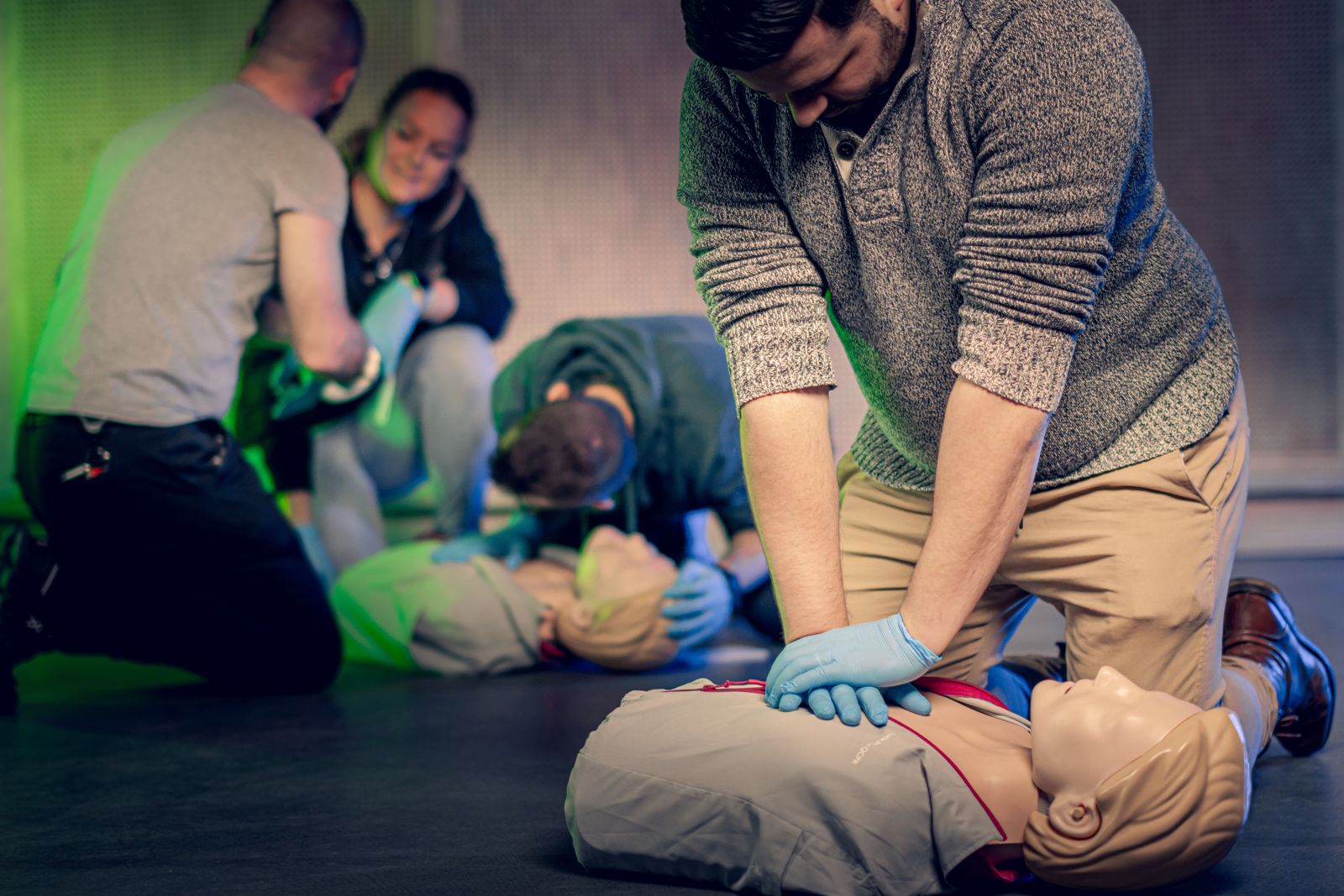
BLS stands for Basic Life Support, the basic measures of resuscitation: recognising an emergency, raising the alarm, chest compressions, rescue breathing and defibrillation with an AED. They can be carried out by anyone without medication or special equipment.
5 frequently asked questions · sources at the end of the article
What does BLS include?
- Recognise: unconscious, not breathing normally
- Raise the alarm: 144, have someone fetch an AED
- Chest compressions: 100–120/min, 5–6 cm
- Rescue breathing 30:2 (if trained)
- Use an AED as soon as available
- Continue until handover
BLS in Switzerland
The Swiss Resuscitation Council (SRC) sets uniform teaching content with the BLS-AED-SRC algorithm. Recognised courses are called BLS-AED-SRC Kompakt and Komplett; there is also the awareness format Quick.
Distinction from ALS and other formats
ALS (Advanced Life Support), ILS (Immediate Life Support) and PALS (Pediatric Advanced Life Support) are aimed at medical professionals and include medication, airway management and manual defibrillation. BLS remains the foundation for everyone.
Who is it for?
For all adults and young people aged 12 and over, especially employees with care, safety or management responsibilities.
Frequently asked questions about BLS
What is the difference between BLS and CPR?
CPR refers to resuscitation as a whole, including with advanced aids. BLS are the basic measures without medication.
Who should attend a BLS course?
In principle, everyone, especially people with care or safety responsibilities.
How long does a BLS course take?
Kompakt 1–2 hours, Komplett 3–4 hours.
How long is the certificate valid?
Two years.
From what age?
Kompakt courses from age 12.