
First aid and emergency medicine
CPR
CPR (cardiopulmonary resuscitation) is the English term for what is known in German as Herz-Lungen-Wiederbelebung. It covers resuscitation as a whole – from chest compressions by laypeople to advanced measures by professionals.
4 frequently asked questions · sources at the end of the article
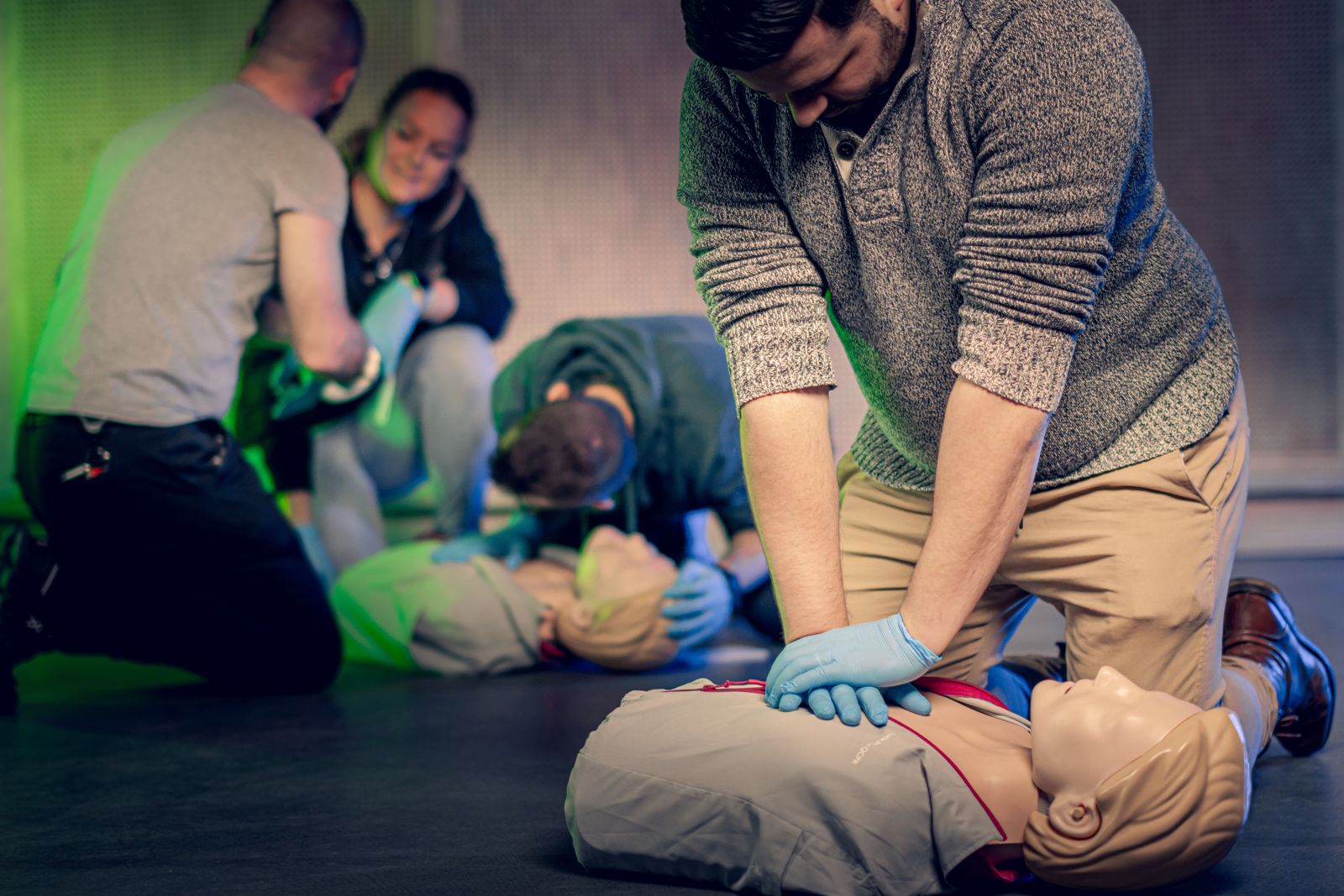
CPR in everyday life
For first aiders, CPR primarily means chest compressions and, if they have been trained, rescue breathing. Hands-only CPR means chest compressions without rescue breaths – the minimum measure for everyone.
High-performance CPR
- Correct compression point: centre of the chest
- Rate of 100–120 per minute
- Depth of 5–6 cm in adults
- Full chest recoil
- Minimal interruptions
- Change rescuers every 2 minutes
Telephone-assisted CPR
The 144 ambulance dispatch centre guides callers through CPR over the phone. Switch on the loudspeaker and follow the instructions.
Courses in English
Healthspot also offers BLS-AED-SRC courses in English – ideal for international teams.
Frequently asked questions about CPR
Is CPR the same as resuscitation?
Yes, essentially. CPR is the English technical term.
What is hands-only CPR?
Chest compressions without rescue breaths – the minimum measure for all helpers.
Where can I learn CPR?
In BLS-AED-SRC courses, also in English.
What does 30:2 mean?
30 compressions, then 2 rescue breaths.