
Emergency equipment and AEDs
AED
An AED (automated external defibrillator) is a device that analyses the heart rhythm in cardiac arrest and, if necessary, delivers an electric shock. It is designed for lay people and guides users through its use with voice prompts.
6 frequently asked questions · sources at the end of the article
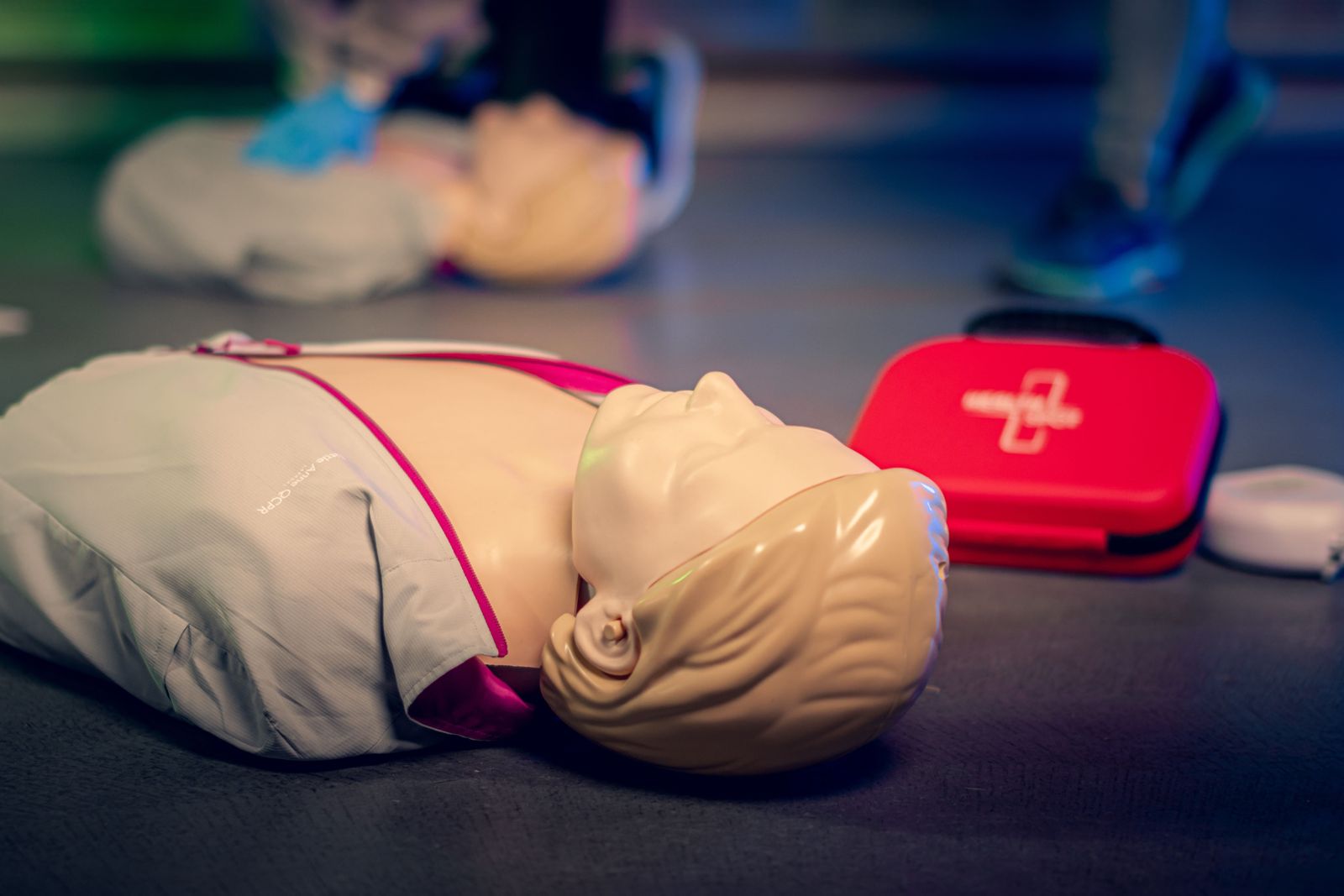
How does an AED work?
Once switched on, the device gives instructions. The pads are applied as shown in the illustration: one below the right collarbone, one below the left armpit. The AED analyses the rhythm and only prompts for a shock if it is medically indicated.
Use according to the SRC
- Use the AED as soon as it arrives at the person
- If there are several helpers, apply the pads while chest compressions continue
- Nobody touches the person while the shock is delivered
- Resume compressions immediately after the shock
- For children under 25 kg or under 8 years of age, activate child mode and apply the pads to the chest and back
AEDs in companies
An AED should be clearly visible, quickly accessible and signposted. Employees must know where it is located. The battery and pads have an expiry date and need to be checked.
Frequently asked questions about AED
May anyone use an AED?
Yes. AEDs are designed for lay people and give clear instructions.
Can an AED cause harm?
It only enables a shock if a shockable rhythm is present.
Is an AED mandatory for companies?
We are not aware of any general legal obligation. However, an AED can greatly improve the chances of survival.
Where should I place an AED?
Centrally, clearly visible, quickly accessible and signposted – ideally in areas with many people or increased risk.
What needs to be maintained?
The battery and pads according to the manufacturer's instructions; the device status should be checked regularly.
How do I recognise an AED?
By the sign showing a heart with a lightning bolt.