
First aid and emergency medicine
Chain of survival
The chain of survival describes the coordinated interaction of different measures and people involved in a medical emergency. It extends from recognising the emergency, through raising the alarm and first aid, to professional medical care.
5 frequently asked questions · sources at the end of the article
What does chain of survival mean?
In a medical emergency, several measures are needed, some in sequence and some at the same time. The chain of survival illustrates how these interlink. The key elements include:
- Recognising the emergency
- Self-protection and securing the scene
- Raising the alarm
- Immediate life-saving measures
- Advanced medical care
- Further treatment
The exact representation may vary depending on the training system and type of emergency.
Why is the chain of survival important?
A medical emergency often requires several people to work together. Raising the alarm early and taking appropriate immediate measures can significantly influence the chances of survival and the further course.
In cardiac arrest, starting resuscitation early and using an AED quickly are particularly decisive.
Importance for companies
Companies should ensure that employees know the most important steps of the chain of survival. These include:
- Recognising an emergency
- Knowing the emergency numbers
- Locating the first aid supplies
- Carrying out basic immediate measures
- Guiding the emergency services to the scene
Practical example
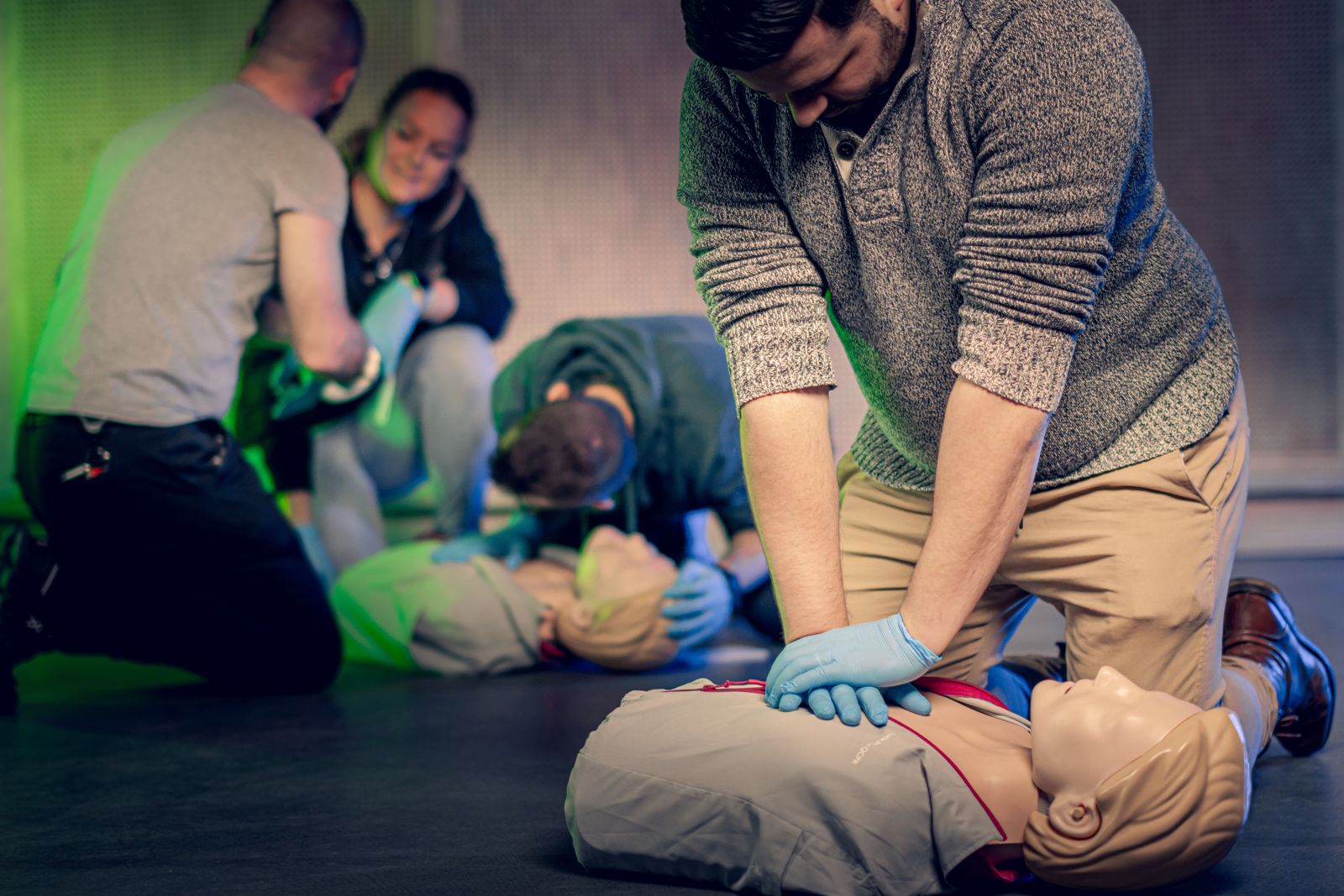
An employee suddenly loses consciousness and is not breathing normally. One person alerts the ambulance service via 144. Another person immediately starts chest compressions. An AED is fetched and used. The measures are continued until the ambulance service takes over.
Frequently asked questions about Chain of survival
What are the most important steps of the chain of survival?
Recognise the emergency, ensure self-protection, alert professional help, carry out appropriate immediate measures and enable further care.
Which emergency number applies in Switzerland?
The number 144 is intended for medical emergencies. Help can also be requested via the European emergency number 112.
Why is raising the alarm early important?
Because professional emergency services must be called out as quickly as possible. At the same time, people present can already carry out life-saving measures.
What is the first link in the chain of survival?
The people present who recognise the emergency and raise the alarm.
What happens after resuscitation?
Professional care and follow-up treatment; the ERC chain of survival also emphasises this part.