
First aid and emergency medicine
Cardiac arrest
In cardiac arrest, the heart stops pumping blood effectively. The person becomes unconscious within seconds and is not breathing or not breathing normally. Without immediate chest compressions and defibrillation, cardiac arrest is fatal.
6 frequently asked questions · sources at the end of the article
What happens in cardiac arrest?
The heart no longer pumps blood around the body. The brain and organs no longer receive oxygen. After just a few minutes, permanent damage occurs, especially to the brain.
The most common cause in adults is cardiovascular disease, such as a heart attack with a life-threatening arrhythmia (ventricular fibrillation).
How do you recognise cardiac arrest?
According to the teaching guidelines of the Swiss Resuscitation Council, cardiac arrest is present when a person is unconscious and not breathing or not breathing normally. A pulse check is not required.
- No response to voice or touch
- No breathing or abnormal breathing, e.g. gasping
- A brief generalised seizure can be a sign
What should you do?
- Ensure your own safety
- Call 144 immediately, ideally without leaving the person, and switch on the speaker
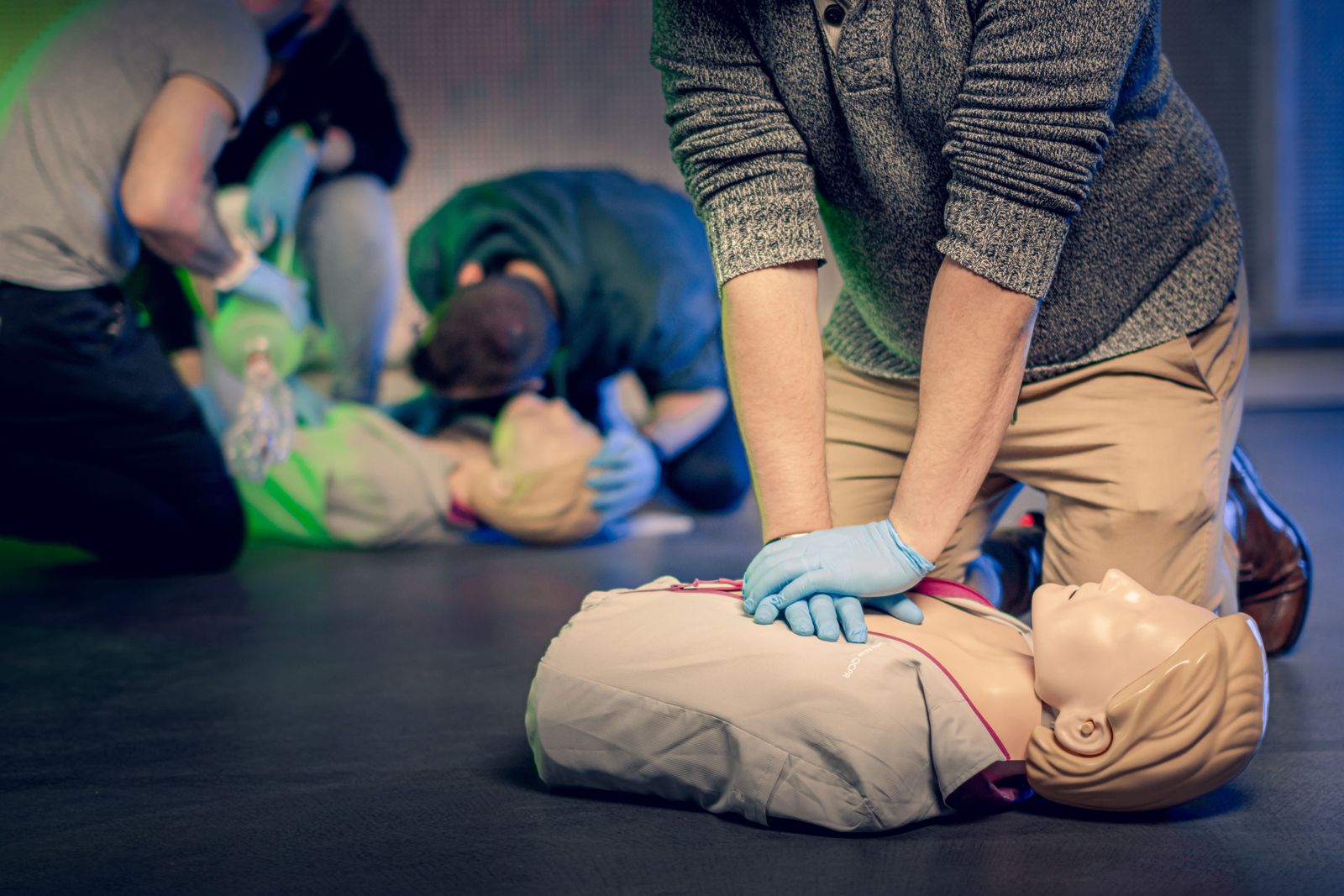
- Start chest compressions immediately: centre of the chest, 100–120/min, 5–6 cm deep
- Have someone fetch an AED and use it as soon as it arrives
- Do not stop until the emergency medical service takes over or the person starts breathing normally again
Relevance for companies
Cardiac arrest can affect anyone, including at work. Colleagues bridge the time until the emergency medical service arrives. Trained employees and an accessible AED significantly improve the chances of survival.
Frequently asked questions about Cardiac arrest
What is the difference from a heart attack?
In a heart attack, a coronary artery is blocked and the heart usually keeps beating. In cardiac arrest, the heart no longer pumps; the person is unconscious and not breathing normally.
Do I need to check the pulse?
No. Unconsciousness and the absence of normal breathing are sufficient to start resuscitation.
Can I do anything wrong?
The worst thing is to do nothing. Without help, cardiac arrest is fatal. If in doubt, resuscitate.
What is gasping?
Isolated, irregular, gasping breaths. They are not normal breathing and are a sign of cardiac arrest.
How long do I need to continue resuscitation?
Until the emergency medical service takes over, the person starts breathing normally again or you are exhausted. Ideally, helpers take turns every 2 minutes.
Where do cardiac arrests occur most often?
According to SWISSRECA, around two thirds occur at home. First aid knowledge is therefore also useful in private life.